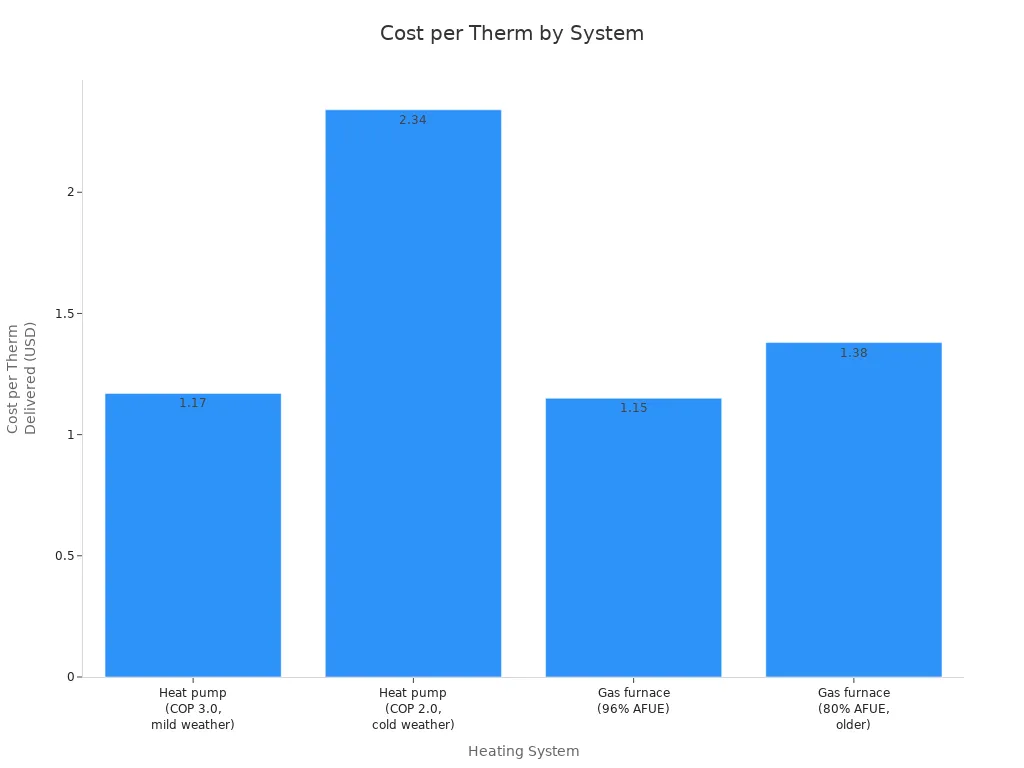
Here is a quick breakdown of baseline efficiency and typical fuel costs:
| System | Efficiency | Fuel Cost | Cost per Therm Delivered |
|---|---|---|---|
| Heat pump (COP 3.0, mild weather) | 300% | $0.12/kWh | $1.17/therm |
| Heat pump (COP 2.0, cold weather) | 200% | $0.16/kWh | $2.34/therm |
| Gas furnace (96% AFUE) | 96% | $1.10/therm | $1.15/therm |
| Gas furnace (80% AFUE, older) | 80% | $1.10/therm | $1.38/therm |
Heat pumps are highly economical in states like Georgia and North Carolina. Conversely, gas furnaces tend to be the better choice in colder northern states where natural gas is cheap. Various rebates and local incentives can significantly lower your upfront costs, so always evaluate your regional climate and energy prices before making a final call.
Key Takeaways
- Heat pumps save homeowners $200–$600 per year in mild climates compared to gas furnaces.
- Consider local energy prices and climate when choosing between a heat pump and a furnace.
- All-in-One Comfort: Heat pumps handle both heating and cooling, meaning you won’t need a separate air conditioner for the summer.
- Regular maintenance is crucial for both systems to ensure efficiency and longevity.
Heat Pump vs Furnace: Quick Cost Comparison
Choosing between a heat pump vs furnace starts with understanding the numbers. This section breaks down the upfront cost, monthly operating cost, and total cost over time. Homeowners can use this cost comparison to make informed decisions.
Upfront Cost Ranges
The upfront cost for installing a heat pump vs gas furnace depends on the system type, home size, and region. Heat pumps usually cost more to install than basic furnaces, but the gap narrows when comparing heat pump vs gas furnace with air conditioning included. The following table shows typical ranges:
| System Type | Cost Range |
|---|---|
| Heat Pump | $3,800 – $8,500 |
| Gas Furnace + AC | $4,000 – $10,000 (combined) |
| Mini-splits | Starting around $2,000 per zone |
| Geothermal | $15,000 to $30,000 |
Installation costs can vary by region. Labor rates, permit requirements, and equipment availability all affect the final price. For example:
- Air source heat pumps range from $3,800 to $25,000+ if new ductwork is needed.
- Natural gas furnaces range from $3,500 to $10,000+ with ductwork.
- Electric furnaces are usually the cheapest to install, starting around $2,500.
- Dual-fuel systems (a heat pump paired with a gas furnace) can easily reach $25,000+.
Monthly Operating Costs
Monthly operating cost is a key factor in the heat pump vs gas furnace debate. Electric heat pumps can save homeowners 20-40% on utility bills compared to traditional HVAC systems. The average ongoing expense for a heat pump is about $15,000 over 15 years. Oil furnaces can cost up to $40,000 in the same period.
- Local electricity and natural gas rates directly affect monthly bills.
- If electricity costs more than three times natural gas per BTU, furnaces often have lower operating cost.
- In mild climates with affordable electricity, heat pumps are more cost-effective.
- In colder regions with cheap natural gas, gas furnaces may be more economical.
- Heat pumps convert electricity into heat more efficiently than gas furnaces, which can offset higher electricity prices.
- Electricity prices have risen by 2-3% annually, while natural gas prices fluctuate more.
Total Cost Over Time
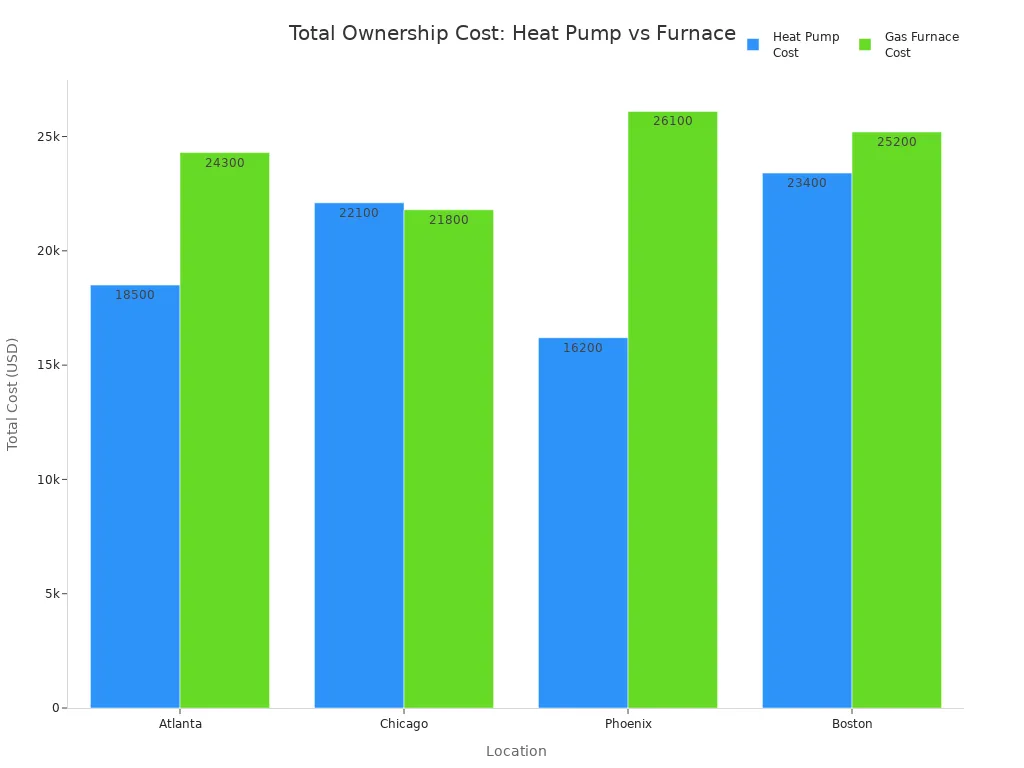
Total cost over time includes installation, energy, maintenance, and repairs. The heat pump vs furnace choice can lead to significant savings depending on location. The following table compares total cost of ownership over 10-15 years:
| Location | Heat Pump Cost | Gas Furnace Cost | Savings |
|---|---|---|---|
| Atlanta | $18,500 | $24,300 | $5,800 |
| Chicago | $22,100 | $21,800 | -$300 |
| Phoenix | $16,200 | $26,100 | $9,900 |
| Boston | $23,400 | $25,200 | $1,800 |
Annual operating cost for a high-efficiency heat pump ranges from $500 to $900. Natural gas furnaces cost $700 to $1,200 per year. Dual fuel systems fall in between. Maintenance costs are lower for heat pumps, averaging $150 per year, compared to $200 for furnaces.
The following table shows long-term savings:
| Cost Category | Heat Pump | Furnace + AC |
|---|---|---|
| Installation (after rebates) | $10,000 | $13,000 |
| Annual operating cost | $1,100 | $1,500 |
| Annual maintenance | $150 | $200 |
| 10-year total | $22,500 | $30,000 |
| 15-year total | $28,750 | $38,500 |
| 15-year savings with heat pump | ~$9,750 | N/A |
How Heat Pumps and Furnaces Work
Heat Pump Basics
A heat pump moves heat from one place to another. In winter, it pulls heat from the outside air or ground and brings it indoors. In summer, it reverses direction and removes heat from your home. Most heat pumps use electricity as their energy source. They can deliver more heat than the energy they consume. For example, a heat pump with a coefficient of performance (COP) of 4 provides 4 kW of heat for every 1 kW of electricity used. This makes the heat pump highly efficient in moderate climates. Heat pumps can also use renewable electricity, which lowers their environmental impact.
Tip: A heat pump can both heat and cool your home, making it a versatile choice for year-round comfort.
Furnace Basics
A furnace creates heat by burning fuel, such as natural gas, oil, or propane. The system heats air and pushes it through ducts into rooms. Furnaces have efficiency ratings called Annual Fuel Utilization Efficiency (AFUE). High-efficiency furnaces can reach up to 97 percent AFUE. However, furnaces cannot exceed 100 percent efficiency because they generate heat from fuel. Gas furnaces emit carbon dioxide, about one pound for every 10 cubic feet of gas burned each year. This adds to household emissions and impacts the environment.
Key Differences
The main difference between a heat pump and a furnace is how they produce warmth:
| System | How it works |
|---|---|
| Heat Pump | Transfers / Moves heat |
| Furnace | Generates / Creates heat |
- A heat pump uses electricity to move heat, while a furnace burns fuel to create heat.
- Heat pumps can achieve COP values between 2 and 5, making them more efficient than furnaces in many cases.
- Furnaces rely on fossil fuels, which produce direct emissions and pollution.
- Switching from a furnace to a heat pump can reduce household carbon emissions, especially if the electricity comes from renewable sources.
- Heat pump emissions have improved over time, while furnace emissions remain constant.
Because of this difference, heat pumps can achieve operational efficiency levels of 200% to 500% (COP 2 to 5), whereas a furnace will always remain below 100%. For homeowners looking to maximize energy efficiency and reduce direct household emissions, a heat pump provides a clear advantage.
Efficiency: Heat Pump vs Gas Furnace
Efficiency in Moderate and Warm Climates
Heat pumps show strong efficiency in moderate and warm climates. They use electricity to move heat instead of generating it. This process allows heat pumps to achieve a coefficient of performance between 2 and 5. That means for every unit of electricity used, they deliver two to five units of heat. Gas furnaces reach a maximum efficiency of about 97% AFUE. In these climates, heat pumps often outperform furnaces. Homeowners can see lower energy bills because heat pumps provide more heat for less energy consumed.
The table below compares average efficiency ratings for modern systems:
| Rating Type | Average Efficiency | Notes |
|---|---|---|
| SEER | Varies, higher is better | Minimum rating varies by model, higher SEER indicates more efficiency |
| AFUE | Up to 98% | Minimum 90 for northern states, 80 for southern climates |
| HSPF | Minimum 7.7 | Higher HSPF indicates more efficiency, declines with lower outdoor temperatures |
Efficiency in Cold Climates
A common misconception is that heat pumps are ineffective in freezing weather. However, modern cold-climate heat pumps feature advanced inverter technology, allowing them to operate effectively in temperatures dropping as low as -15°F.
While a standard high-efficiency gas furnace maintains a steady thermal efficiency (around 92% to 97%) regardless of the weather, high-end cold-climate heat pumps can still achieve up to 300% efficiency in sub-zero conditions. Recent field tests clearly demonstrate this capability:
- Variable speed heat pumps met 100% of home heating needs in 0°F conditions.
- A Lennox prototype delivered 100% heating at 5°F and 70–80% heating at -10°F.
- Mitsubishi hyper heat units provided 80% heating at -13°F.
Heat pumps have proven to be more energy efficient than gas furnaces in cold climates. Homeowners in northern states can benefit from these advancements. Cold-climate heat pumps offer reliable performance and lower energy costs, even when temperatures drop.
Dual Heating and Cooling Benefits
Heat pumps provide both heating and cooling in one system. This dual function sets them apart from furnaces, which only heat. During summer, heat pumps cool homes by moving heat outside. In winter, they bring heat indoors. Homeowners do not need separate systems for heating and cooling.
- Heat pumps simplify home comfort.
- They reduce the need for extra equipment.
- Energy efficiency improves year-round.
Choosing a heat pump means enjoying efficient heating and cooling. This versatility helps homeowners save money and space. It also reduces maintenance needs compared to managing both a furnace and an air conditioner.
Climate Suitability and Performance
Best Uses for Heat Pumps
Heat pumps excel in regions characterized by mild winters and moderate summers. Because they rely on extracting ambient heat, they achieve their maximum cost-effectiveness in climates where temperatures consistently remain above freezing. States along the Sun Belt, the Pacific Coast, and the Southeast (such as Georgia and North Carolina) are ideal environments for these systems.
Additionally, the physical condition of the house plays a significant role. A well-insulated home with tightly sealed windows will maximize a heat pump’s ability to maintain a consistent, comfortable indoor climate while minimizing electricity usage.
Tip:If your local winter temperatures typically stay above 25°F, a standard air-source heat pump will deliver highly reliable and economical heating.
When Furnaces Make Sense
Furnaces perform well in colder climates. These systems generate heat by burning fuel, which works efficiently when outdoor temperatures fall below freezing. States like Minnesota, North Dakota, and Illinois rely on furnaces for consistent warmth during harsh winters. Gas furnaces can heat homes quickly and maintain steady temperatures even during snowstorms.
Homes with older ductwork or limited electrical capacity may find furnaces easier to install. If natural gas prices are low in your region, furnaces often cost less to operate. Some homeowners prefer furnaces because they have fewer moving parts and require less maintenance.
| Climate Type | Recommended System | Key Advantage |
|---|---|---|
| Mild/Warm | Heat Pump | Lowest operational cost; handles both heating and cooling. |
| Cold/Harsh | Furnace | Delivers rapid, high-capacity heat during extreme freezes. |
Choosing the right system depends on your local weather, energy prices, and home setup. Always compare the performance of each system in your climate before making a decision.
Maintenance and Lifespan
Typical Maintenance Needs
Just like a vehicle requires routine oil changes, your HVAC system relies on regular maintenance to prevent costly breakdowns and maintain efficiency.
Because a heat pump provides both heating and cooling, it operates 365 days a year. This continuous workload means it requires bi-annual servicing—typically in the spring and fall. Technicians need to clean the coils, verify refrigerant levels, and inspect the outdoor unit, which is exposed to the elements. Consistent maintenance is crucial here; it can improve a heat pump’s energy efficiency by up to 25%, translating to significant savings on your utility bills.
Furnaces, on the other hand, sit dormant throughout the summer. Because they only operate seasonally and are housed safely indoors, their components face far less mechanical stress. A furnace generally only requires a single annual inspection right before the first winter freeze to clean filters, check sensors, and ensure safe combustion.
| Aspect | Heat Pump | Furnace |
|---|---|---|
| Maintenance Frequency | Bi-annual checks (spring and fall) | Annual maintenance |
| Component Wear | More wear due to year-round operation | Less wear, operates mainly in winter |
| Outdoor Exposure | Exposed to weather, requiring more checks | Indoor installation, less exposure |
| Repair Complexity | More complex due to dual function | Simpler repairs, single function |
Maintenance is the single most important factor in ensuring your heat pump lasts beyond its expected 15 years. Think of it like a vehicle: routine oil changes and inspections prevent costly breakdowns, and the same is true for your heating system.
Expected Lifespan
The expected lifespan of heating systems depends on usage and maintenance. Most residential heat pumps last between 10 and 15 years. Furnaces can operate for 15 to 20 years or more, especially with proper care. Manufacturer data shows the average furnace lasts about 17.7 years, while the average heat pump lasts 13.3 years.
| Equipment Type | Average Lifespan (Years) |
|---|---|
| Furnace | 17.7 |
| Heat Pump | 13.3 |
Heat pumps wear out faster because they run all year, providing both heating and cooling. Furnaces only work during winter, so their parts last longer. Regular maintenance is key for both systems. Homeowners who schedule routine service with trusted providers, such as George Group, can maximize the lifespan and efficiency of their equipment.
Both systems require regular maintenance to operate efficiently. Heat pumps need coil cleaning and refrigerant system checks. Furnaces require annual inspections, sensor cleaning, filter replacements, and component checks.
Rebates, Incentives, and Long-Term Savings
Available Rebates and Tax Credits
Financial incentives have drastically shifted the math on HVAC replacements. Many state programs and local utility companies now offer substantial rebates designed to offset the initial cost of installing high-efficiency equipment. For context, here is a snapshot of current rebate programs across the Northeast:
| State | Program Description |
|---|---|
| Connecticut | Eversource and UI offer rebates for furnaces, boilers, and heat pumps. |
| Delaware | SEU incentives for high-efficiency HVAC systems. |
| Massachusetts | Mass Save® rebates for heat pumps, furnaces, boilers, and water heaters. |
| New Jersey | NJ Clean Energy Program rebates for heat pumps, smart thermostats, and high-efficiency furnaces. |
| New York | NYSERDA incentives for air source and geothermal heat pumps. |
| Pennsylvania | PA Act 129 utility rebates for high-efficiency heating and cooling equipment. |
| Rhode Island | National Grid RI rebates for heat pumps, furnaces, and boilers. |
| Vermont | Efficiency Vermont rebates for heat pumps and energy-efficient water heaters. |
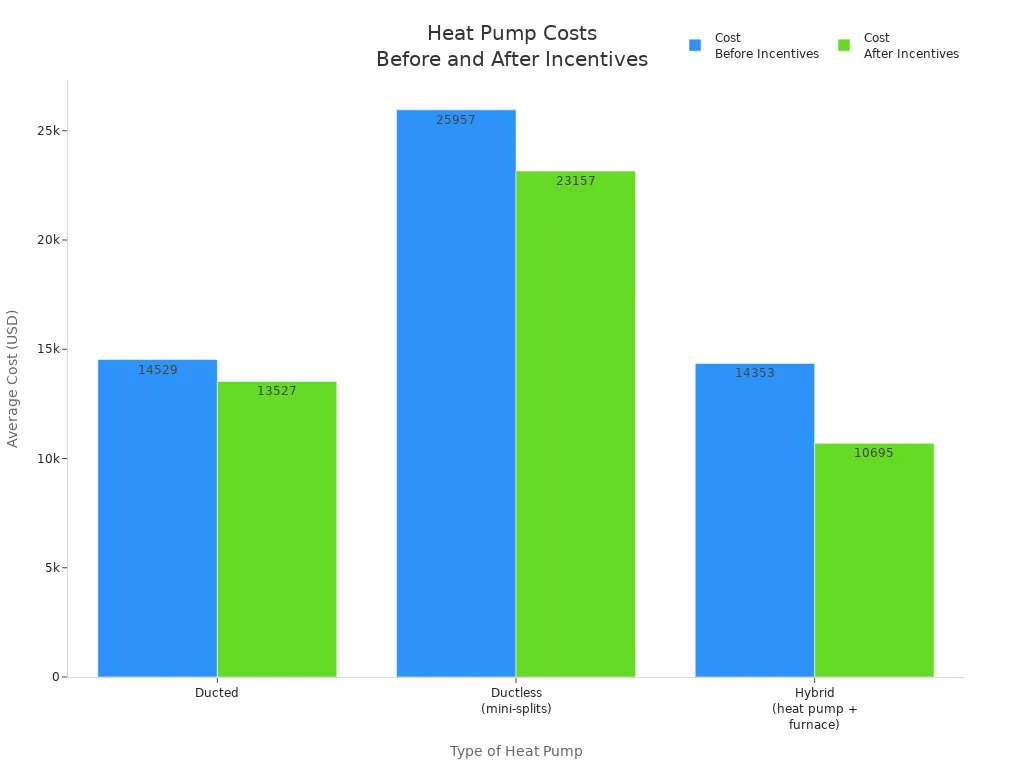
Federal incentives also help lower costs. The Inflation Reduction Act provides installation credits and total cost credits, sometimes over $10,000. Low-to-moderate income households may qualify for rebates up to $8,000. Federal tax credits cover 30% of project costs, up to $2,000. These incentives can reduce the net price of a heat pump or hybrid system by thousands of dollars.
| Type of heat pump | Avg. cost before incentives | Avg. cost after incentives |
|---|---|---|
| Ducted | $14,529 | $13,527 |
| Ductless (mini-splits) | $25,957 | $23,157 |
| Hybrid (heat pump + furnace) | $14,353 | $10,695 |
Payback Periods and Resale Value
The payback period is the time it takes for energy savings to cover the initial cost of a new system. Heat pumps often have a payback period of 6–8 years, especially when rebates and lower energy bills are included.
| System Type | Initial Cost | Annual Operating Cost | Payback Period |
|---|---|---|---|
| Air Source Heat Pump | $25,000 | $3,000 | 6–8 years |
| Gas Boiler | $10,000 | $6,000 | N/A |
| Electric Heater | $5,000 | $7,000 | N/A |
Installing a modern heat pump or furnace can also boost your home’s resale value. Homes with updated HVAC systems often sell faster and for 5–10% more than those with older equipment. In recent years, converting from a gas or oil furnace to a heat pump returned up to 96% of project costs, though this return now ranges from 49% to 66% due to changing energy prices. Buyers look for efficient systems, especially in areas with extreme weather.
Choosing the Right System for Your Home
Key Questions to Ask
Selecting the best heating system for your home requires careful consideration. Start by asking these important questions:
- What is the climate in your area? High-efficiency furnaces work well in extreme cold, while heat pumps perform best in milder conditions.
- What are the local energy costs for electricity, propane, and natural gas? Compare rates to estimate your monthly bills.
- How well is your home insulated? A well-sealed home increases the efficiency of both systems.
- Do you want built-in cooling? Heat pumps offer both heating and cooling, while furnaces need a separate air conditioner.
- What are your environmental goals? Heat pumps powered by renewable energy can reduce emissions.
- Is your home equipped with existing ductwork? This affects installation costs and system choices.
- Are you looking for long-term efficiency or lower upfront costs?
The table below highlights key features to compare:
| Feature | Heat Pump | Furnace |
|---|---|---|
| Initial Installation Cost | Higher | Lower |
| Heating Efficiency | High (mild climates) | High (cold climates) |
| Cooling Capability | Yes (built-in) | No (needs separate AC) |
| Environmental Impact | Lower (electric models) | Higher (gas models) |
| Maintenance Needs | Seasonal service recommended | Seasonal service recommended |
Common Scenarios
Many homeowners face similar situations when choosing between a heat pump and a furnace:
- In Orange County, heat pumps are more cost-effective for most homes. Lower energy bills and no gas connection fees can save $15,000 to $22,000 over 15 years.
- Homes in California with mild winters benefit from heat pumps, which operate efficiently year-round.
- If your home already has a working air conditioner and only needs a new furnace, a gas furnace may be the most economical choice.
- Homes needing major electrical upgrades may find the cost of switching to a heat pump outweighs the benefits.
- For homeowners on a tight budget, a basic gas furnace and AC combo offers the lowest upfront cost.
Consider your home’s climate, energy costs, insulation, and existing equipment. Each scenario affects which system will save you more money and provide the best comfort.
Heat pumps save more money in warm and mild climates, while gas furnaces remain reliable in colder regions. Regional energy prices and climate play a major role in this decision. Rebates and incentives, such as those available in Massachusetts, can make heat pumps much more affordable. To maximize savings, homeowners should:
- Assess local climate and utility costs.
- Review home insulation and current heating system.
- Get multiple quotes and check for rebates from providers like George Group.
The best system depends on your home, budget, and long-term needs.
FAQ
What is the main difference between a heat pump and a furnace?
A heat pump moves heat from outside to inside your home. A furnace creates heat by burning fuel. Heat pumps can also cool your home, while furnaces only provide heat.
Can a heat pump work in very cold weather?
Modern heat pumps can work in temperatures as low as -15°F. Cold-climate models use advanced technology to keep homes warm, even during harsh winters.
Which system costs less to maintain?
Heat pumps usually have lower maintenance costs each year. They need regular checks because they run year-round. Furnaces need yearly service, but repairs may cost more if parts fail.
Are there rebates or incentives for installing these systems?
Yes! Many states and utility companies offer rebates for energy-efficient systems. George Group can help you find local incentives to lower your upfront costs.
A heat pump moves heat from outside to inside your home. A furnace creates heat by burning fuel. Heat pumps can also cool your home, while furnaces only provide heat.
Modern heat pumps can work in temperatures as low as -15°F. Cold-climate models use advanced technology to keep homes warm, even during harsh winters.
Heat pumps usually have lower maintenance costs each year. They need regular checks because they run year-round. Furnaces need yearly service, but repairs may cost more if parts fail.
Yes! Many states and utility companies offer rebates for energy-efficient systems. George Group can help you find local incentives to lower your upfront costs.