
Ventilation Solution (ERV)
George Ventilation Solution ERV is an efficient solution for fresh indoor air. A variety of energy-saving technologies and air purifying filters allow you to breathe healthier air.
Why George ERV?
While conventional natural ventilation causes significant thermal energy loss, the George ERV system introduces fresh outdoor air while continuously exhausting indoor air pollutants. The integrated heat exchanger optimizes energy efficiency by recovering both sensible and latent heat during the air exchange process, minimizing the workload on primary HVAC systems.
Natural Ventilation

Energy Recovery Ventilation(ERV)
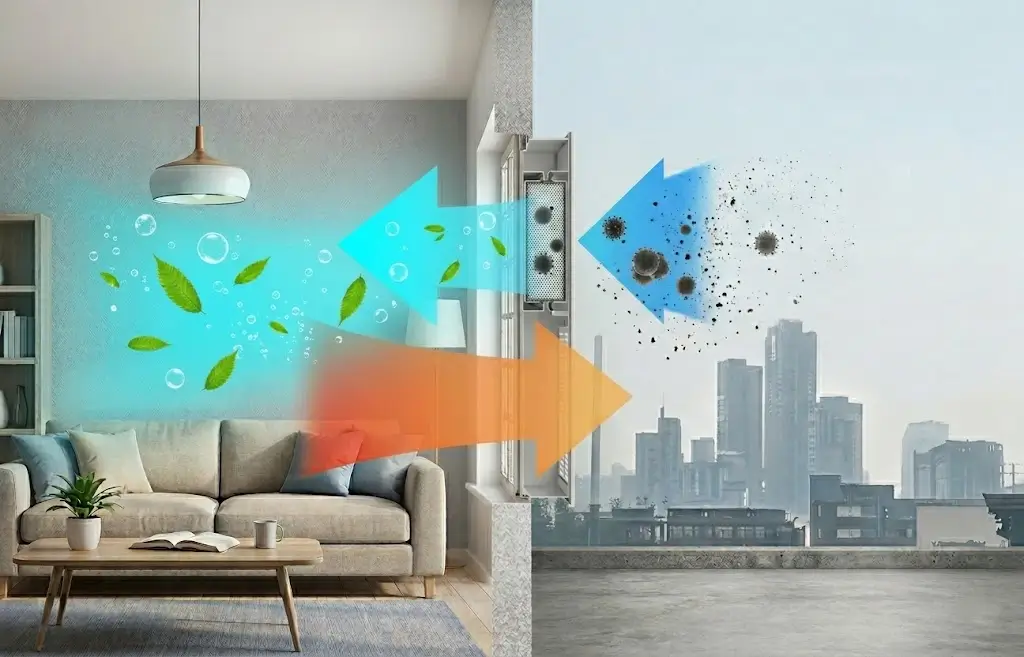
Interlocks with Air Conditioning System to Save Energy

The Energy Recovery Ventilation (ERV) unit integrates seamlessly with the indoor air conditioning system to optimize overall thermal efficiency. During ventilation, the ERV recovers sensible and latent heat from exhausted indoor air to pre-cool or pre-heat incoming fresh air. This interlocked operation directly reduces the thermal load on the primary HVAC unit, maintaining precise indoor air quality (IAQ) standards while operating at a significantly lower energy consumption than standalone systems.
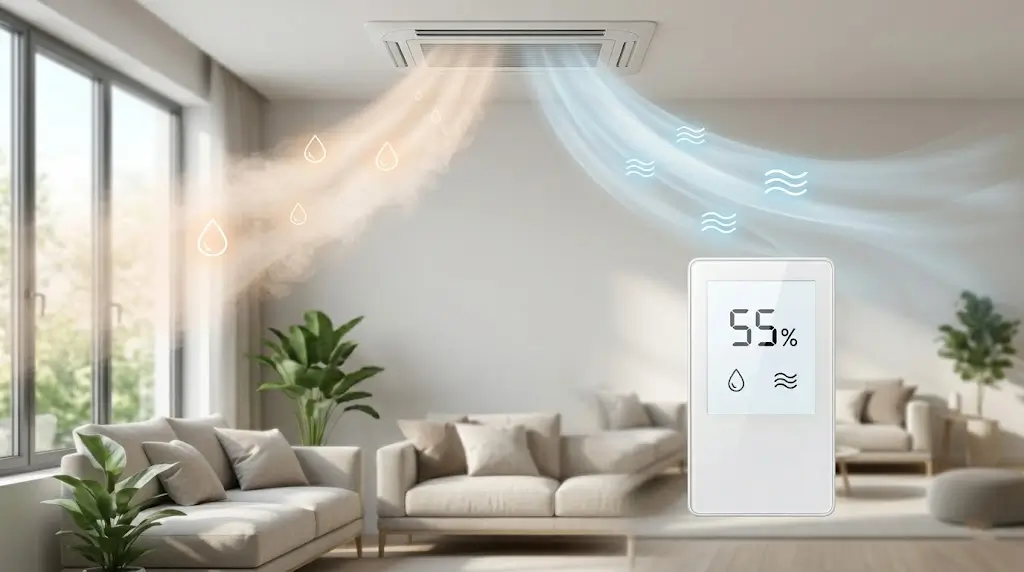
Control Your Space’s Humidity
George ERV has humidification and dehumidification functions, making it a good match for spaces where you need both temperature and humidity control. Humidity can also be monitored through the wired remote control.
Related Products
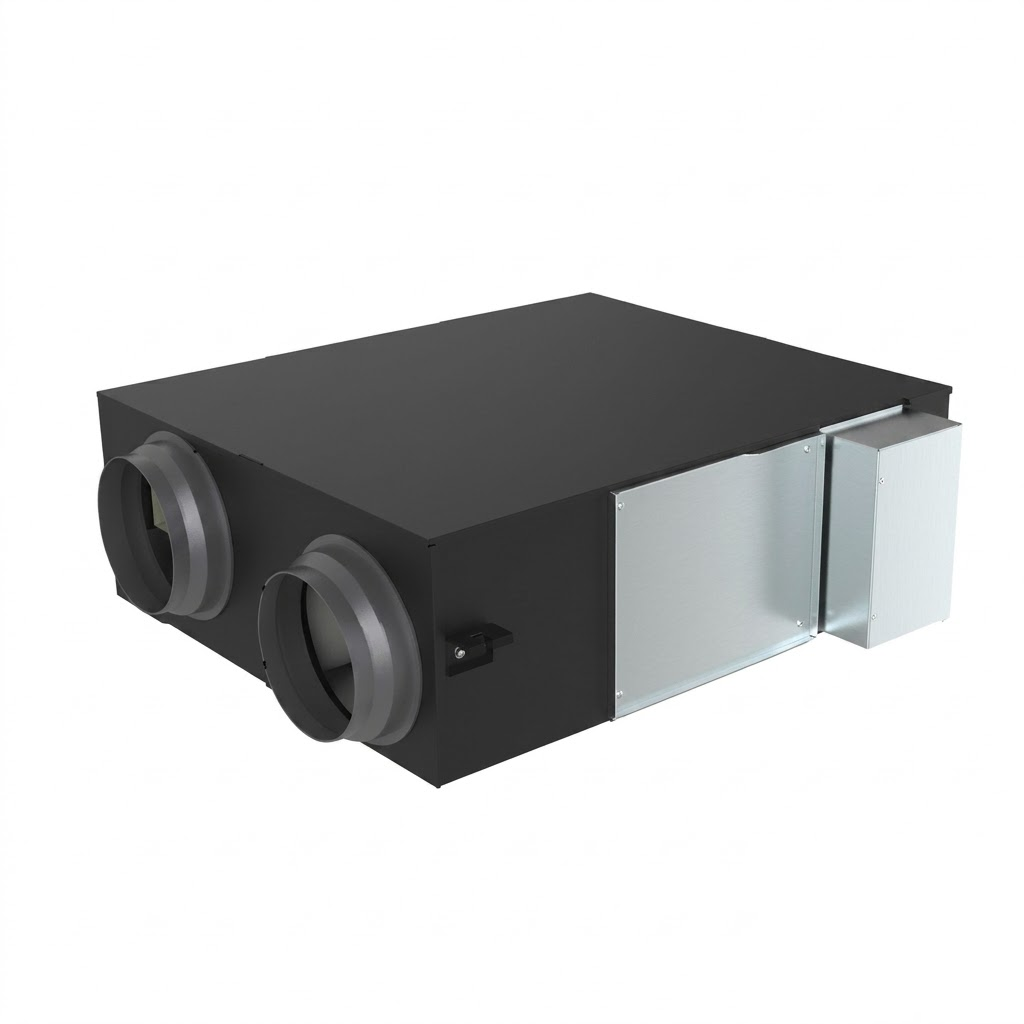
Black ERV energy recovery ventilator, power supply range 220V~50Hz
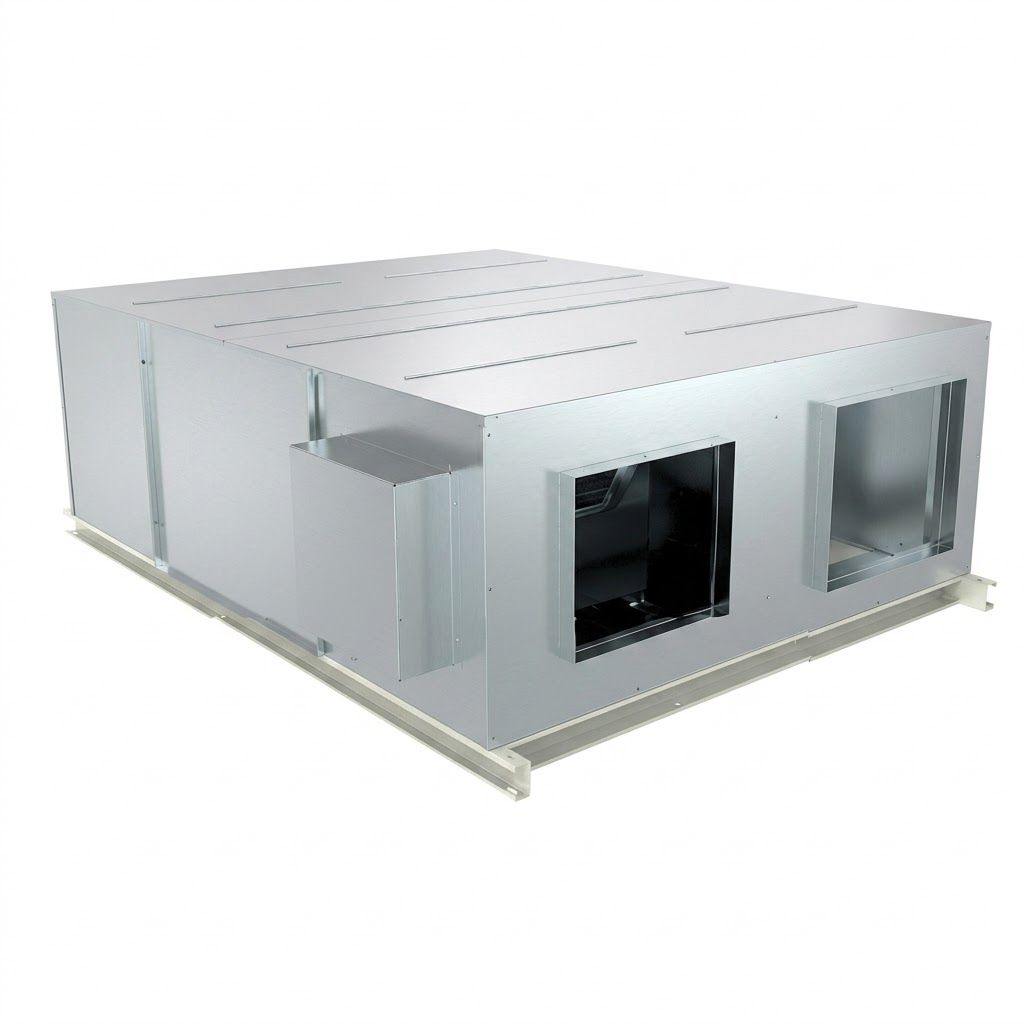
Large industrial-grade metal air handling unit (AHU), power supply 380V 3N~ 50Hz
FAQ
What is an EVR system and how does it work?
An EVR (Energy Recovery Ventilation) system is a whole-house ventilation solution that brings fresh outdoor air into your home while exhausting stale indoor air. It uses a heat exchange core to transfer energy between incoming and outgoing air, helping maintain indoor comfort without wasting heating or cooling energy.
Is an EVR system the same as a fresh air system?
Not exactly. A basic fresh air system only brings outdoor air inside, while an EVR system also balances temperature and humidity by recovering energy from the outgoing air. This makes EVR more efficient for year-round home ventilation.
What is the difference between EVR, ERV, and HRV systems?
EVR and ERV are often used interchangeably, but technically:
- ERV (Energy Recovery Ventilator): transfers heat and humidity
- HRV (Heat Recovery Ventilator): transfers heat only
EVR systems are generally closer to ERV systems and are better for areas with humidity changes.
Can an EVR system be installed in an existing home?
Yes, EVR systems can be installed in both new and existing homes. However, installation in existing homes may require modifications to ductwork or ceiling space depending on the layout of your HVAC system.
Do I need ductwork for an EVR system?
Most whole-house EVR systems connect to ductwork to distribute fresh air efficiently. However, some compact or decentralized EVR units can operate without full duct systems in smaller spaces.
What size EVR system do I need for my home?
System size depends on your home’s square footage, layout, and occupancy. For most residential homes between 1,500–3,000 sq ft, a standard whole-house EVR unit is sufficient, but proper airflow calculation (CFM) is recommended for accurate sizing.