
VRF System
A VRF system is an advanced HVAC solution engineered for precise temperature management. It provides simultaneous heating and cooling by circulating refrigerant between a single outdoor condenser and various indoor units.
What is a VRF System?
Variable Refrigerant Flow (VRF) connects a single outdoor condenser to multiple indoor units via a shared piping network. It modulates refrigerant flow to deliver independent, simultaneous temperature control across different building zones.
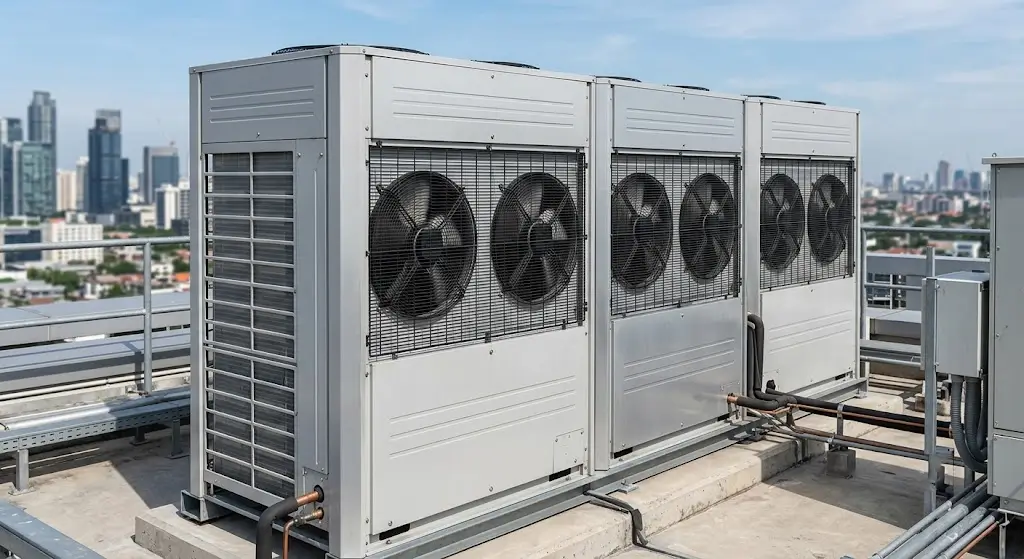
Outdoor Units
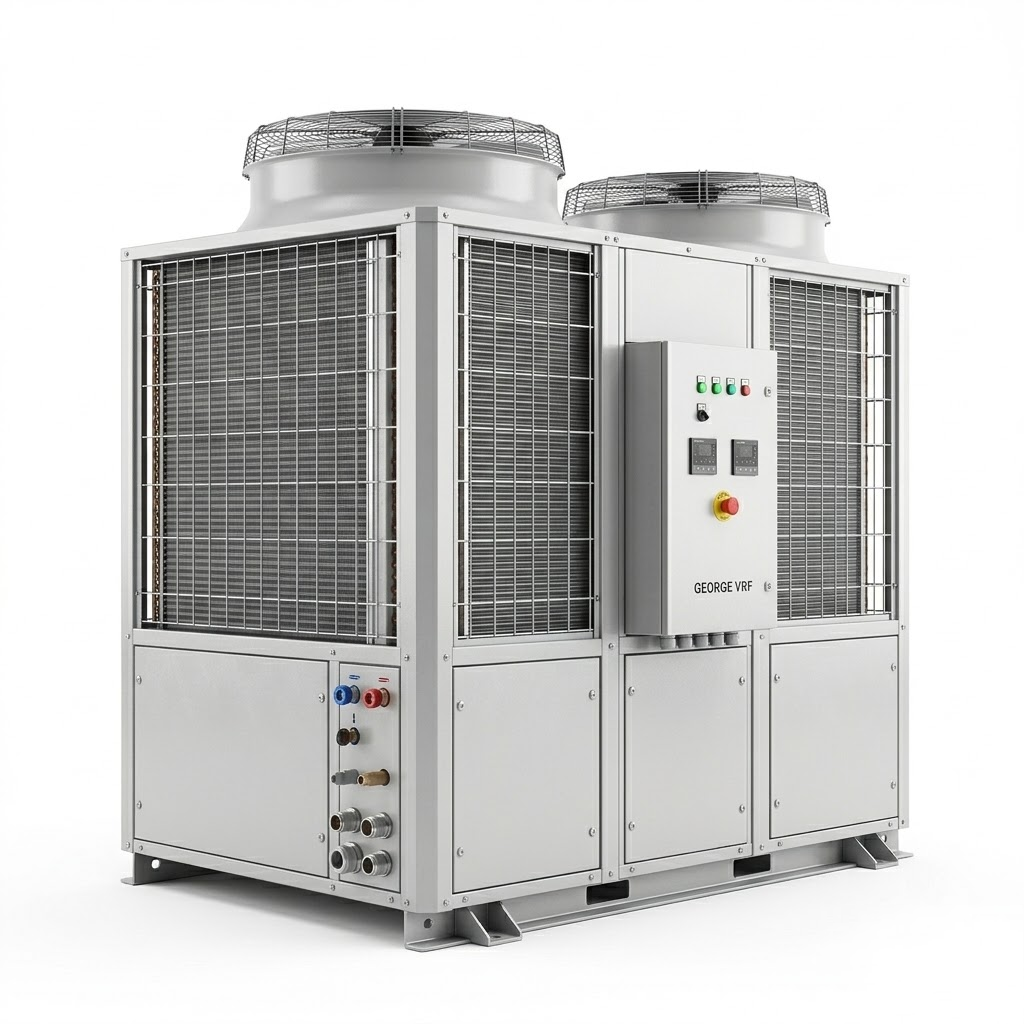
The VRF outdoor unit serves as the system’s central power hub, using inverter technology to modulate refrigerant flow for precise, energy-efficient climate control across multiple zones. This integrated design allows a single unit to connect to various indoor terminals, optimizing rooftop space and simplifying mechanical installation.
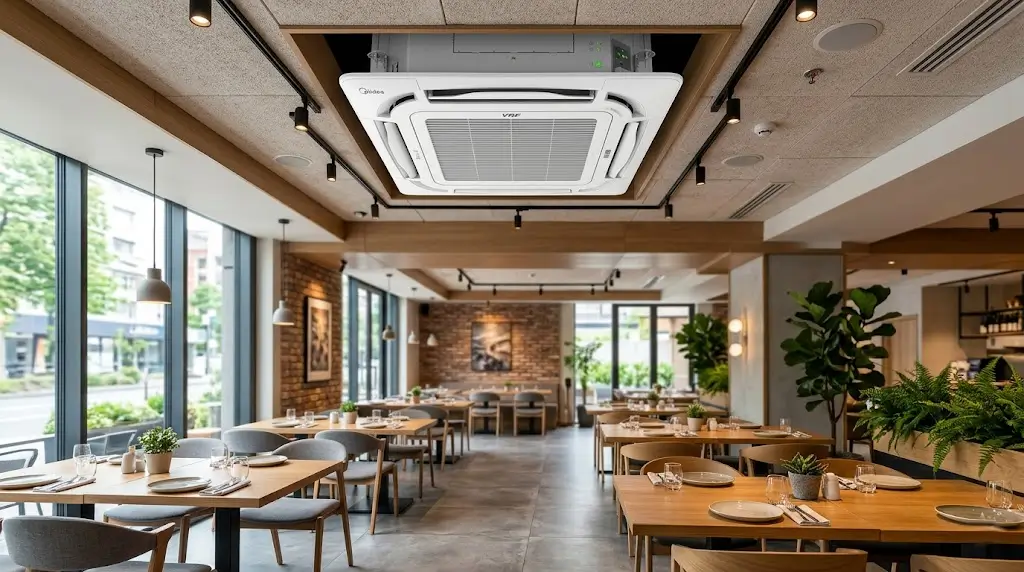
Indoor Units
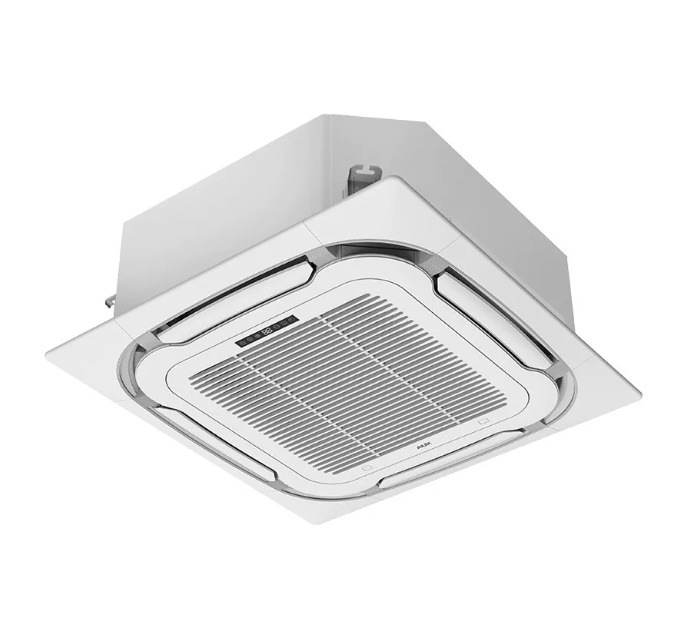
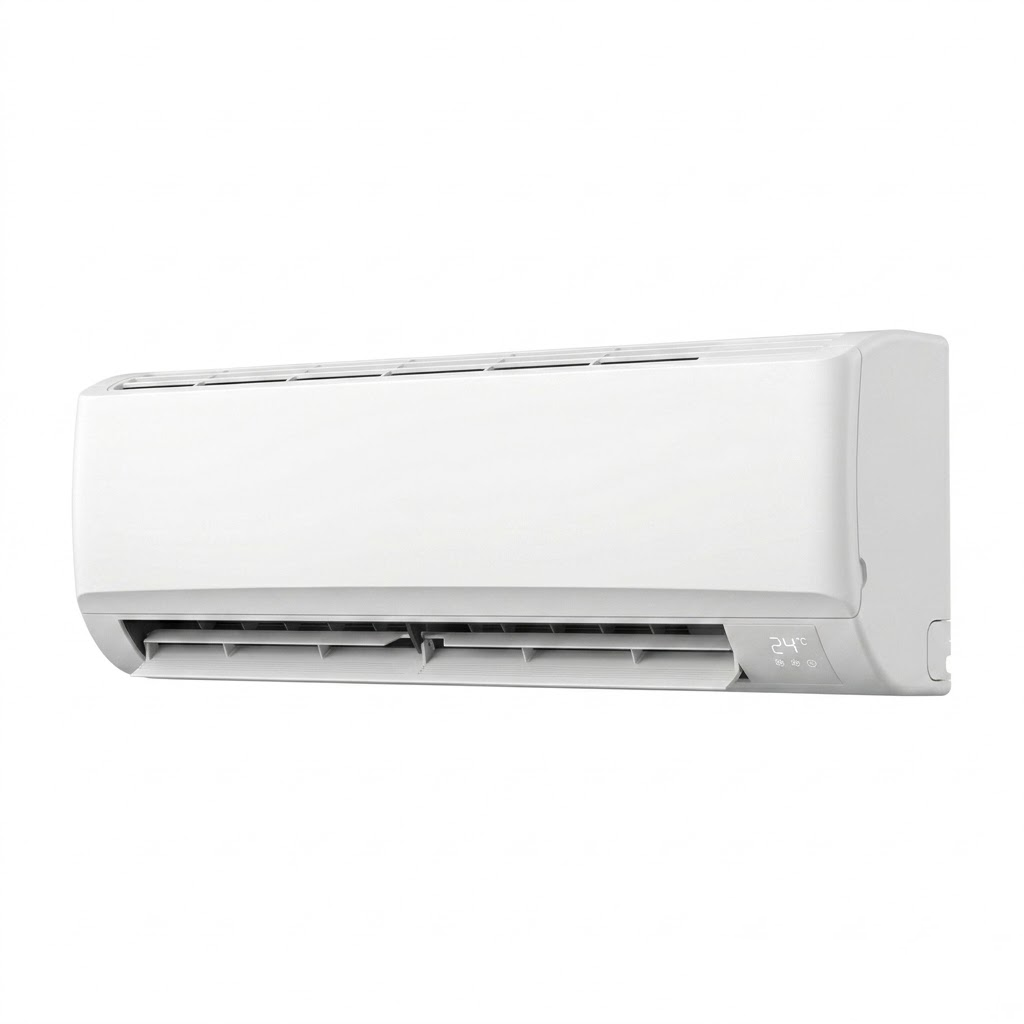
A VRF (Variable Refrigerant Flow) indoor unit is a terminal device connected to a shared outdoor system that independently regulates its own refrigerant flow based on the specific temperature demands of its zone. This on-demand operation ensures highly efficient, individualized climate control across different rooms. Available in various quiet, low-profile designs—such as ceiling cassettes, concealed ducts, or wall-mounted units—they seamlessly integrate into both commercial and residential spaces to provide optimal, customized comfort.
From HVAC Layout to Reality
From precise 2D piping layouts to completed VRF installations — see how engineering designs integrate seamlessly into building environments. Drag the slider to compare.
Commercial Office VRF System
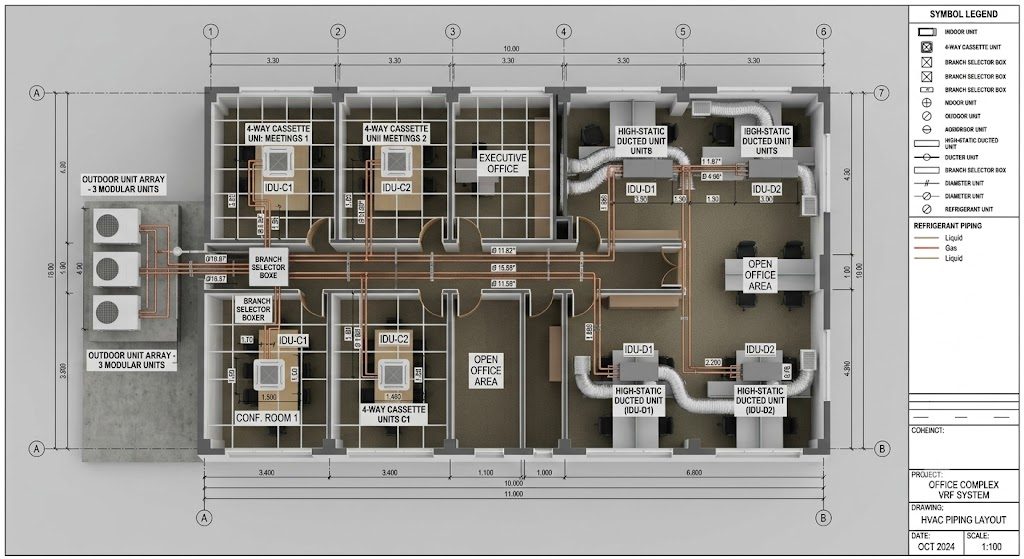
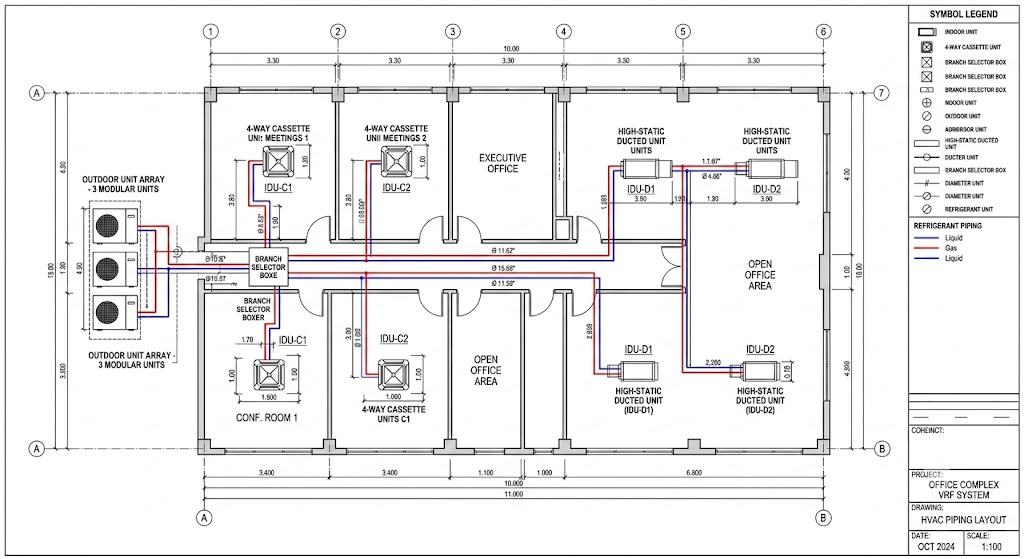
Commercial VRF system integration. Precise refrigerant piping and indoor unit placement, completed by our professional installation team.
VRF APPLICATIONS
Engineered for Every Environment
From luxury residential villas to large-scale commercial complexes — our VRF systems deliver precise, energy-efficient climate control
Commercial Offices
Independent zoning and high-efficiency climate control tailored for modern office buildings, ensuring employee comfort and energy savings
- Independent zone control
- High IPLV efficiency ratings
- BMS system integration
- Server room cooling support
High-End Residential
Whisper-quiet operation with concealed ducted units that seamlessly integrate into custom interior designs for maximum aesthetic appeal
- Whole-house climate control
- Concealed ceiling installations
- Ultra-low noise operation
- Smart home connectivity
Hotels & Hospitality
Reliable 24/7 operation and centralized management designed to provide ultimate guest comfort while optimizing operational costs
- Centralized controller systems
- Keycard interlock integration
- Fresh air processing units
- Low maintenance design
Retail & Mixed-Use
Scalable outdoor unit arrays and flexible piping layouts to accommodate diverse commercial layouts and high-traffic environments
- Modular outdoor arrays
- High-static pressure options
- Long refrigerant piping capabilities
- Rapid cooling performance
Integrated VRF Climate Systems for Whole-House Projects.
Scalable, high-efficiency cooling and heating architectures designed for seamless installation
Explore George Air Condition
A full range of HVAC systems engineered for precise temperature control, energy efficiency, and seamless integration into residential and commercial projects.
FAQ
What are the technical differences between 2-pipe (Heat Pump) and 3-pipe (Heat Recovery) VRF systems?
A 2-pipe system operates exclusively in either heating or cooling mode at any given time. A 3-pipe system incorporates an additional high/low-pressure gas line and a heat recovery branch controller, allowing simultaneous cooling and heating across different indoor units within the same system. This achieves higher overall energy efficiency through internal heat transfer.
What key parameters must be considered when evaluating VRF system capacity?
Capacity evaluation requires analyzing calculated building cooling/heating loads, ambient design temperature corrections, piping length capacity attenuation, and the indoor-to-outdoor diversity ratio (typically permissible between 50% and 130%, dependent on building peak load coefficients).
What are the strict physical limitations for VRF refrigerant piping design?
System design must adhere to manufacturer-specified maximum piping limits. This includes the total piping length, the equivalent length from the outdoor unit to the farthest indoor unit, and the maximum allowable elevation differences between the outdoor and indoor units, as well as between individual indoor units. Exceeding these limits causes excessive pressure drops, capacity attenuation, and compressor oil return failures.
What are the critical installation protocols to ensure the long-term stability of a VRF system?
Critical protocols include purging with nitrogen during copper brazing to prevent internal oxidation; conducting a pressure and leak test for a minimum of 24 hours; and executing a deep vacuum process using a two-stage vacuum pump prior to charging additional refrigerant to completely remove moisture and non-condensable gases from the system.