

ERV

Isometric cutaway diagram of a 3-story commercial office building showcasing a VRF HVAC system and rooftop DOAS with ERV, illustrating supply and exhaust ductwork routing
ERV, HVAC

VRF + DOAS/ERV: A Commercial Design Guide for Ventilation, Humidity Control, and Commissioning

Variable refrigerant flow (VRF) can provide efficient, independently controlled heating and cooling across commercial zones. What it does not automatically provide is a complete outdoor-air strategy.

That distinction matters. A project can have correctly sized indoor units and still suffer from high humidity, stale air, pressure imbalance, or unresolved controls conflicts if the dedicated outdoor air system (DOAS), energy recovery ventilator (ERV), exhaust systems, and VRF controls are designed separately.
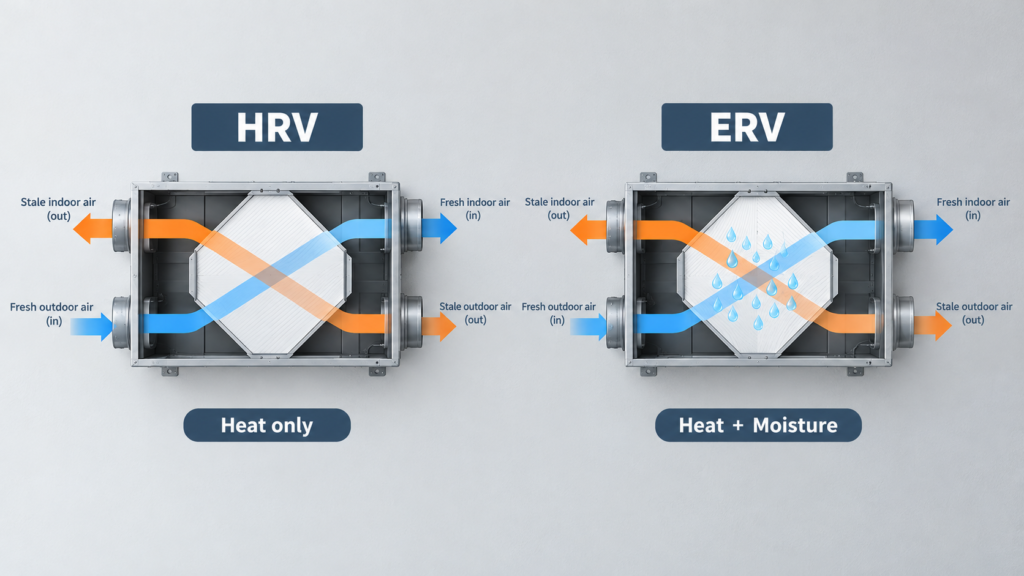
HRV vs ERV ventilation system comparison showing heat-only recovery in HRV and heat and moisture transfer in ERV through airflow exchange cores.
ERV

ERV vs HRV: Which One Should You Actually Buy?

If you just want the short answer: buy an ERV if you live somewhere with humid summers or hot weather in general. Buy an HRV if you live in a cold, dry climate and your main problem is too much indoor moisture in winter, like condensation on windows. If you’re in a mixed climate with real winters and sticky summers, an ERV is usually the safer bet.
That’s the gist. The rest of this article explains why, and where the usual advice falls apart.

Scroll to Top

Connect With Us