Two years after moving into a beachfront villa, Marco noticed rust and pitting on his outdoor HVAC unit. Salt air, high humidity, and storm exposure had taken their toll. The damage led to costly repairs and reduced efficiency.
Key Takeaways
- Choose HVAC systems with factory-applied e-coatings and stainless steel parts to resist salt air damage.
- Place outdoor units on the leeward side of the villa and elevate them above flood levels for protection.
- Size your system correctly using Manual J calculations to ensure effective dehumidification in humid coastal climates.
- Schedule professional inspections quarterly if your property is within 1,500 feet of saltwater to catch corrosion early.
HVAC Selection Guide: Coastal Climate Threats

How Coastal Conditions Impact HVAC Components
Airborne microscopic sodium chloride particles continuously settle on condenser coils and electrical terminals, absorbing ambient moisture to form a highly conductive corrosive film. Once this occurs, chloride ions actively disrupt the passive oxide layer on aluminum components, initiating severe pitting corrosion. If left untreated, this degradation rapidly penetrates fin surfaces and coil walls, inevitably leading to refrigerant leaks and catastrophic electrical faults.
Within 1,500 feet of open saltwater, corrosivity falls under Category C4 per ISO 9223. Copper refrigerant lines resist chloride corrosion better than aluminum. However, modern all-aluminum coils create copper-to-aluminum junctions, forming galvanic cells where dissimilar metal contact rapidly accelerates degradation. ASHRAE Research Project 1276 documented that pitting corrosion on aluminum condenser fins causes capacity degradation of up to 30% under accelerated salt spray conditions. This impacts heat transfer efficiency.
Vulnerable components include condenser coils, electrical connections, fan assemblies, and metal cabinets. Salt deposits on coils reduce efficiency. Panels and structural parts suffer rusting. Salt residue on electrical contacts increases short cycling risk. Coastal exposure demands material selection suited to the environment.
Salt Air, Humidity, and Moisture Damage Risks
Beyond accelerating chemical corrosion, high coastal humidity dramatically shifts the operational burden of HVAC systems. Because air conditioners must handle both sensible and latent cooling, systems in tropical environments expend massive energy solely on moisture removal. This constant dehumidification demand forces compressors into prolonged cycles, causing accelerated mechanical wear and generating excessive condensate that frequently overwhelms drain pans.
In coastal climates, humidity control becomes a primary challenge. Because systems must work harder to remove moisture, this increased workload not only raises energy consumption but also leaves damp ductwork vulnerable to mold growth. Moisture damage from condensation, combined with salt air, accelerates corrosion on coils and fins. Effective dehumidification prevents many issues.
Extreme coastal weather introduces severe physical threats: wind-driven debris can easily flatten heat exchanger fins and crack refrigerant lines, while storm surges and saturated soil risk submerging compressors or compromising the condenser’s foundation.
Understanding these coastal threats is the first step. This HVAC selection guide helps readers account for high salt spray and humidity. The corrosion mechanisms are well understood. Any coastal HVAC installation requires careful planning for these coastal climate differences.
Comparing HVAC Systems for Coastal Conditions
Comparing Coastal HVAC Architectures: Split, Packaged, and VRF Systems
The choice of system architecture dictates coastal resilience and aligns with regional engineering standards. Different markets favor specific configurations based on architectural styles and climate extremes.
Variable Refrigerant Flow VRF Systems: The standard for luxury villa projects across Southeast Asia and coastal Africa. VRF systems consolidate the cooling load into one or two high-capacity outdoor units to serve the entire property. This massive reduction in outdoor footprint minimizes the total surface area exposed to marine environments.
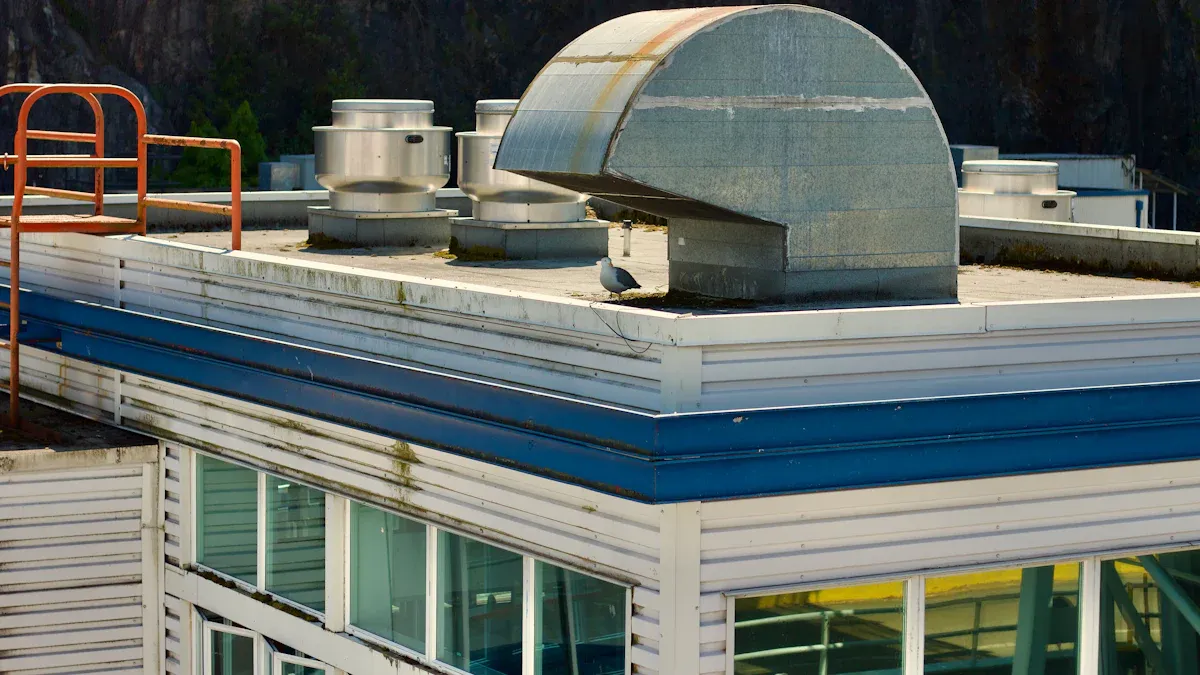
Packaged Units: Highly prevalent in North American light commercial and residential markets. These units combine all components in one cabinet, often placed on rooftops. This placement offers zero natural shielding. Salt particles travel at high velocity and deposit directly on coils, requiring maximum factory protective coatings.
Standard Split Systems: Common globally for single-zone applications. The outdoor condenser sits at ground level. This allows contractors to strategically position the equipment behind architectural shielding walls, cutting wind-driven salt particulate accumulation significantly.
| Placement & Environment | Wind Exposure Level | Salt Particulate Impact | Expected Lifespan Impact |
|---|---|---|---|
| Coastal Rooftop | Severe (Unshielded) | High Velocity / Direct | Reduced |
| Coastal Ground-Level | Low (Architecturally Shielded) | Indirect / Mitigated | Extended |
The table above shows a stark difference. Rooftop units face severe conditions. Ground-level units benefit from architectural protection. This factor alone can significantly extend the service life of your equipment.
Place outdoor units out of direct salt spray, keep at least 2 feet of clearance, and shield from wind and driving rain without choking airflow.
Key Corrosion-Resistant Features to Prioritize
When selecting equipment, it is crucial to emphasize specific features that resist coastal conditions. Factory-applied protective treatments represent the baseline for marine environments. OEM factory e-coats provide superior protection compared to field-applied alternatives.
- Coil Coverage: The factory-applied electrocoating process ensures complete coverage, including on enhanced fin designs.
- Corrosion Resistance: The coating provides excellent resistance to coastal marine environments, extending service life when properly maintained.
- Uniform Application: The electro-deposition process ensures all metal surfaces receive an even, uniform finish.
Coastal and salt air environments are the most well-documented use case for HVAC coil coatings. Salt spray is highly corrosive to unprotected aluminum fins and copper tubing, and the corrosion process accelerates in humid marine climates where salt doesn’t dry out between exposure cycles. Factory-applied permanent epoxy resin coatings offer corrosion resistance, and when applied correctly, they minimize loss of heat transfer—a critical consideration for active heat exchange surfaces.
Beyond coatings, examine the materials used in construction. Electrical stability dictates system longevity in high-humidity zones. Inverter PCB boards must undergo silicone conformal coating treatment to resist moisture. Additionally, electrical control boxes must meet IP54 or IP55 sealing standards to prevent salt-laden moisture from causing terminal short circuits. Look for hermetic compressors with sealed terminals. These details matter for long-term reliability.
When comparing hvac systems, ask manufacturers about their factory coastal package. This package typically includes e-coated coils, corrosion-resistant fasteners, and sealed control boards. Some brands offer enhanced warranties for coastal installations. These warranties signal confidence in the product’s corrosion resistance.
Your hvac choices should also consider fin design. Enhanced fin patterns increase surface area for heat transfer. However, tight fin spacing traps salt particles. Choose coils with wider fin spacing if available. This design reduces salt accumulation and simplifies cleaning.
Finally, consider the condenser fan motor. Coastal rated units use sealed ball bearings instead of sleeve bearings. Sealed motors resist moisture intrusion. This feature extends motor life in humid environments. Every component matters when you face harsh coastal conditions. Prioritize these features during your selection process.
Engineering specifications for marine environments require rigorous baseline data. Outdoor unit heat exchangers must feature Gold Fin or Blue Fin hydrophilic anti-corrosion coatings capable of passing a minimum 1000-hour Neutral Salt Spray NSS test. Additionally, electrical stability dictates system longevity. Inverter PCB boards must undergo silicone conformal coating treatment, and electrical control boxes must meet IP54 or IP55 sealing standards to prevent salt-laden moisture from causing short circuits.
Coastal HVAC Installation Tips
Placement and Elevation Strategies
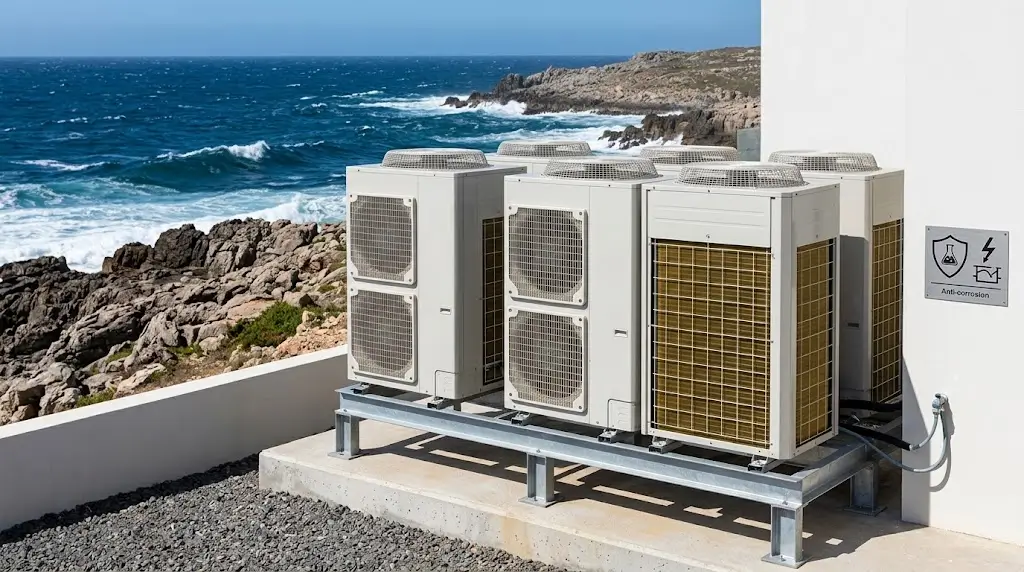
Smart placement reduces salt exposure before you ever turn the system on. Position outdoor units on the leeward side of the villa, away from prevailing ocean winds. This simple step cuts salt particulate accumulation dramatically. Keep at least two feet of clearance around the unit for airflow and maintenance access. Avoid enclosing the equipment in a structure that blocks ventilation.
Elevation protects equipment from flood damage. Local codes often require HVAC equipment to be elevated above the Base Flood Elevation (BFE) in flood zones, sometimes with additional freeboard. Use corrosion-resistant hardware for mounting.
Anchoring and Sealing for Storm Resilience
Hurricane straps and corrosion-resistant fasteners keep units secured during high winds. Standard steel bolts rust quickly in salt air. Stainless steel or coated fasteners resist degradation. Anchor the condenser pad to a concrete slab or structural beam. A shifted unit can bend refrigerant lines and crack seals.
Proper sealing of ductwork and electrical conduits prevents water intrusion. Duct seals must resist water column pressures exceeding six to ten feet, with higher peaks during storm surges. Two-part closed-cell foam offers excellent adaptability and chemical resistance. Pre-engineered mechanical seals provide high water resistance and remain re-enterable for future cable changes. Mastic putty performs poorly under water pressure and deforms with heat or cable movement.
Periodic rinsing with fresh water, where appropriate and in line with the manufacturer’s guidance, can help reduce salt film build-up. Also, reduce direct impact of rain and salty aerosol on exposed parts, but avoid enclosing the unit in a structure that compromises ventilation and maintenance access.
These installation best practices extend equipment life significantly. Coastal hvac specialists recommend scheduling professional inspections before and after storm seasons. Check for corrosion, loose hardware, or tilting after major weather events. Keep systems off if the unit shifted, the pad settled, lines bent, or flooding occurred. Following these installation best practices protects your investment and ensures reliable operation through harsh coastal conditions.
Corrosion Protection for Coastal Properties
Protective Coatings: E-Coats and Spray-On Solutions
Protective coatings form the primary defense against salt air damage. These coatings shield metal surfaces from moisture and corrosive particles. Two main options exist for coastal properties: OEM factory e-coats and aftermarket spray-on coatings.
OEM factory e-coats utilize an electro-deposition process where the entire coil is immersed in an epoxy resin bath. By applying an electric current, the coating permanently bonds to all metal surfaces, ensuring complete and uniform coverage across sharp edges and tight fin spaces.
Aftermarket spray-on coatings offer a different approach. Technicians apply these coatings after manufacturing, either on-site or in a shop. These products provide flexibility for existing units. They can include anti-microbial properties. The coating creates a durable barrier that shields metal surfaces from coastal corrosive elements. The key benefit involves cost-effectiveness. Owners can protect units already installed without replacing the entire system.
Both options extend equipment lifespan. Effective protection prevents premature replacements. The coating maintains optimal operation and can help lower energy bills. Application thickness is critical: the coating must be applied within manufacturer-recommended tolerances to provide a strong defense against salt air without insulating the coils and negatively impacting heat transfer efficiency. Supporting methods include regular fresh-water rinsing to remove salt deposits and use of corrosion-resistant materials in system construction.
| Feature | OEM Factory E-Coat | Aftermarket Spray-On Coating |
|---|---|---|
| Application Timing | Applied before initial installation | Applied post-manufacturing |
| Application Method | Full immersion in process tanks | Spray-applied on-site or in-plant |
| Coverage | Full penetration and uniform deposition | Flexible for existing units |
| Key Performance Attributes | Impact-resistant, flexible | Cost-effective, can include anti-microbial properties |
Material Upgrades and Routine Maintenance
Material upgrades complement protective coatings. Vulnerable components benefit from specific replacements. Coils should feature factory epoxy or powder coatings. Cabinets and fasteners need coated aluminum housings or stainless steel. Electrical compartments require sealed enclosures to protect boards and wiring. Drain pans need reinforced, coated construction to resist brine corrosion.
| Vulnerable Component | Recommended Material Upgrade |
|---|---|
| Coils | Factory epoxy or powder coatings, or polymer-coated coils |
| Cabinets and fasteners | Coated aluminum housings, stainless steel coils and fasteners |
| Electrical compartments | Sealed enclosures to protect boards and wiring |
| Drain pans | Reinforced, coated pans to resist brine corrosion |
Routine maintenance serves as the first line of defense. Coastal HVAC specialists recommend specific practices. Locate outdoor units in areas with lower direct salt exposure. Use protective condenser covers designed for coastal climates. Clean the equipment regularly to remove accumulated salt deposits. Use corrosion-resistant parts when replacing components. Schedule professional service more often than for inland systems. Fresh-water rinsing removes salt deposits effectively. Professional technicians inspect electrical components, clean coils, and verify the integrity of protective layers on HVAC equipment during each visit.
| Distance from Shore | Relative Corrosion Rate | Recommended Professional Inspections |
|---|---|---|
| Within 1,500 feet | Higher | More frequent |
| 0.5 to 2 miles | Moderate | More frequent |
| 2 to 5 miles | Lower | Standard annual with corrosion focus |
| Over 5 miles inland | Standard inland rate | Annual standard maintenance |
Homes close to the shore require more frequent inspections. Those further away can follow standard annual schedules but should still request a corrosion check.
These coastal safeguards protect your investment. The combination of proper coatings, material upgrades, and routine maintenance ensures reliable operation in harsh seaside conditions. Owners who follow these guidelines enjoy longer equipment life, fewer repairs, and lower energy costs over time.
Sizing, Dehumidification, and Maintenance Plans
Global Sizing Standards: Manual J and Tropical Load Calculations
Proper sizing determines HVAC performance in coastal conditions regardless of the geographical region. Oversized systems short-cycle, cooling the space rapidly without extracting sufficient moisture.
For projects in North America, Manual J calculations dictate exact heat gain and loss measurements for residential compliance. A properly sized system under Manual J runs longer cycles to remove moisture effectively.
However, for villa projects in regions like coastal Africa or the Philippines, engineers must apply High-Humidity Tropical Cooling Load Calculations. These international standards account for extreme latent heat loads where dehumidification demands often surpass sensible cooling needs. Precise adherence to these regional sizing protocols ensures the compressor manages moisture extraction without premature wear.
Dehumidification Strategies and Service Schedules
Standard systems cool but do not provide targeted dehumidification. In coastal environments, indoor humidity often reaches high levels. Additional dehumidification strategies are necessary for comfort and health.
Integrating a dedicated dehumidifier with the primary HVAC system allows for targeted moisture removal independent of the cooling cycle. When paired with smart thermostats featuring integrated humidity sensors, this setup continuously monitors and adjusts indoor air quality to prevent moisture accumulation. Ultimately, this comprehensive moisture management significantly reduces allergens, protects valuable wood furnishings, and reduces the latent cooling strain on the primary HVAC equipment, ensuring both occupant comfort and long-term system reliability.
Maintenance schedules for these properties need adjustment. Standard bi-annual service is the baseline. These homes require more frequent maintenance.
For coastal installations, salt-air corrosion accelerates fin degradation on outdoor units. Properties close to saltwater require more frequent coil cleaning. Technicians should perform frequent coil cleaning, regular filter changes, periodic electrical inspections, and annual refrigerant checks. This maintenance schedule extends equipment life. Regular maintenance ensures reliable dehumidification and ventilation throughout the year.
This hvac selection guide has covered the essential decisions for coastal properties. Understanding the corrosive climate, choosing corrosion-resistant equipment, installing strategically, and applying protective coatings form the foundation of success. These upfront measures save significant money and hassle over the system’s lifespan.
Ensure your coastal villa project meets rigorous marine durability standards. Submit your architectural floor plans through our online inquiry form for a customized VRF system design and precise tropical cooling load calculation. Our engineering team will review your specifications to provide a comprehensive quotation and technical layout. For clients requiring physical verification, you can also use the form to schedule a visit to our newly opened Foshan showroom to inspect the anti-corrosion equipment and system build quality firsthand.
FAQ
How often should coastal HVAC units receive professional maintenance?
Homes close to saltwater need more frequent inspections. This schedule catches early signs of corrosion before major damage occurs. Regular maintenance extends equipment life significantly.
Does a whole-home dehumidifier improve indoor comfort?
Yes. A dedicated dehumidifier removes moisture independently of cooling cycles. It maintains proper relative humidity. This step improves indoor air quality and reduces strain on the HVAC system.
What is the best placement for outdoor units in coastal properties?
Place units on the leeward side of the villa. Elevate them above flood levels using corrosion-resistant hardware. This positioning reduces salt exposure and protects against storm damage.
Why is proper sizing important for humidity control in coastal homes?
Oversized systems short-cycle, cooling the space rapidly without extracting sufficient moisture. Applying precise standards like Manual J or High-Humidity Tropical Cooling Load Calculations ensures the equipment runs long enough to achieve effective dehumidification and stable temperatures.”