China dominates global HVAC manufacturing. The industry’s 2024 production value reached an estimated USD 51.17 billion according to Grand View Research, cementing its position as the world’s largest equipment ecosystem. Domestic giants like Gree, Midea, and Haier lead in volume, yet identifying the optimal Chinese HVAC manufacturer depends entirely on your project’s engineering specifications, budget constraints, and quality compliance requirements.
This guide cuts through marketing noise. We present ten factories ranked through transparent criteria: manufacturing capacity, certifications, R&D investment, export experience, and financial stability. More importantly, we provide a practical verification framework. This system helps you audit any potential supplier before committing capital, preventing costly sourcing errors. Our goal transforms complex research into an actionable sourcing strategy for your 2026 initiatives.
Key Takeaways
- China produces over 80% of the world’s air conditioners, offering unmatched scale and cost advantages.
- The top three manufacturers (Gree, Midea, Haier) control 60% of the market, but specialized factories serve niche needs.
- Match your factory choice to your project: big three for volume, specialists for unique requirements.
- Verify suppliers with third-party audits, sample testing, and client references to avoid quality issues.
- Use the five-step verification process to ensure a reliable partnership and successful sourcing.
China’s HVAC Manufacturing Dominance
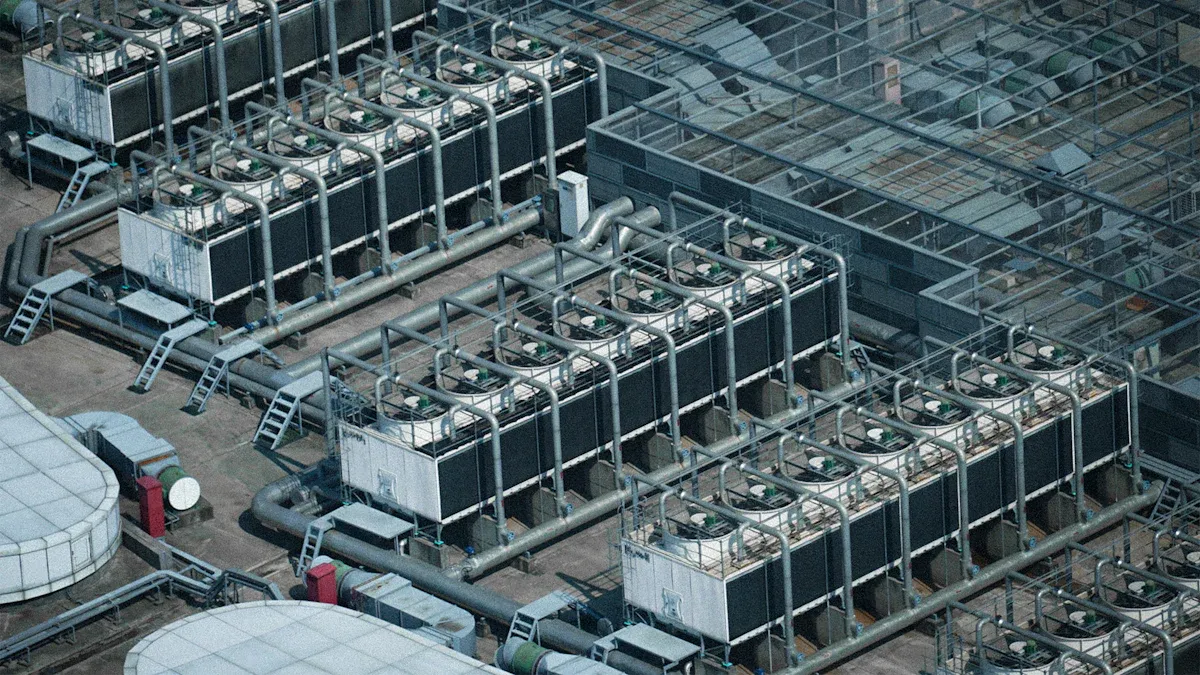
China produces more HVAC equipment than every other nation combined. The 2025 data published by JRAIA (The Japan Refrigeration and Air Conditioning Industry Association) shows a striking disparity. China manufactured 155 million air conditioning units. The entire world produced 185 million units. China’s share reached 83.8 percent of global output.
| Year | China (million units) | World Total (million units) | China Share (%) |
|---|---|---|---|
| 2025 | 155 | 185 | 83.8 |
(Source: Compiled from Chinese customs data and ChinaIOL market reports.)
The scale difference matters for buyers. China ships 53 million units annually. That total splits into 41 million residential units and 12 million commercial units. The United States produces 24 million units per year. Japan produces 11 million. India produces only 4 million. No other country approaches China’s manufacturing capacity. This volume creates cost advantages that smaller production bases cannot match.
The Power of Regional Clusters
Geographic concentration drives much of China’s efficiency. Guangdong Province serves as the primary hub for electronics and smart appliance production. The region possesses mature ecosystems for research, development, and component sourcing. Foshan and Shunde sit at the center of this network.
Midea Building Technologies operates in Shunde/Foshan, Guangdong, confirming that a top-tier HVAC manufacturer functions within this concentrated area.
Midea Group maintains its headquarters in Shunde. This location provides a concrete example of manufacturer density. Dense supplier networks surround these facilities. Compressor makers, heat exchanger fabricators, and control system developers operate within short transport distances. Skilled labor pools develop around these industrial zones. Workers gain specialized knowledge that improves production quality. Procurement teams sourcing from an HVAC factory in China’s Guangdong region gain direct access to this integrated component supply chain.
The Rise of the ‘Big Three’ and Specialists
Three companies dominate China’s domestic market. According to market shipment data from ChinaIOL, Midea, Gree, and Haier control approximately 60 percent of shipments. This concentration ratio indicates a stable oligopolistic structure..
In 2025, the CR3 (concentration ratio of top 3 players) in the shipment segment reached 60%, indicating a highly stable oligopolistic market structure.
Revenue data confirms this dominance. Midea holds roughly 29 percent of all-channel revenue. Gree captures about 17 percent. Haier controls approximately 15 percent. Together, these three giants command 61 percent of the market.
Volume leadership does not tell the complete story. A new wave of specialized manufacturers serves niche demands. Explosion-proof unit producers build equipment for hazardous environments. VRF specialists focus exclusively on variable refrigerant flow systems. These smaller factories offer deep expertise that generalists cannot match. Buyers with unique requirements often find better solutions among these focused operations. The market structure rewards both scale and specialization.
How We Ranked These Factories
Our Key Evaluation Criteria
Evaluating an HVAC manufacturing facility in China requires rigorous quantitative analysis across five operational dimensions. Manufacturing scale and capacity form the foundation. We examined annual production volumes, factory floor space, and automation levels. Larger operations typically offer better economies of scale. Smaller facilities may provide greater flexibility for custom orders.
Quality control systems and international certifications carry equal weight. A factory without recognized certifications cannot access regulated markets. The table below outlines the primary certifications buyers should verify before placing orders.
| Certification | Region | Requirement Status |
|---|---|---|
| CE | Europe | Required for market access |
| PED | Europe | Required (with CE) for pressure equipment |
| RoHS | Global (required in EU) | Required for electrical/electronic components |
| UL | North America | Often required for safety testing |
| CSA | Canada | Often required for safety testing |
| CRN | Canada | Required for pressure vessels and piping |
| ANSI/ASME | North America | Required in many codes for pressure systems |
| NSF | North America | Required for potable water systems |
| IAPMO | North America | Required in many jurisdictions for plumbing |
| AHRI | North America | Voluntary but widely used for performance |
Europe demands CE marking as a baseline. PED governs pressure equipment. RoHS ensures environmental compliance. North American markets require UL or CSA for safety. Canada mandates CRN for pressure vessels. AHRI certification remains voluntary yet signals verified performance.
Technological innovation and R&D investment formed the third criterion. We reviewed patent portfolios and engineering headcount. Companies investing heavily in inverter technology and smart controls earned higher rankings. Export experience and global reputation constituted the fourth dimension. We analyzed shipment records to major markets. A factory serving European or North American clients demonstrates proven compliance capability.
Financial stability and company history completed our assessment. Long operational track records indicate resilience. Public financial reports revealed revenue trends and debt levels.
Data Sources and Verification
Our ranking synthesizes multiple data streams. Public financial reports provided revenue and profitability figures. Industry analyses contributed market share estimates. Export data from Chinese customs revealed shipment volumes. Customer reviews from international buyers offered practical insights.
This methodology produces a reliable starting point. However, it cannot replace independent due diligence. Buyers must verify every claim through direct engagement. Request factory audit reports from third-party agencies. Conduct video calls with production managers. Order sample units for independent testing. These steps confirm whether a factory meets your specific requirements.
The ranking serves as a filter, not a final verdict. Use it to shortlist candidates. Then apply your own verification process before committing resources.
Top 10 China HVAC Factory Profiles for 2026
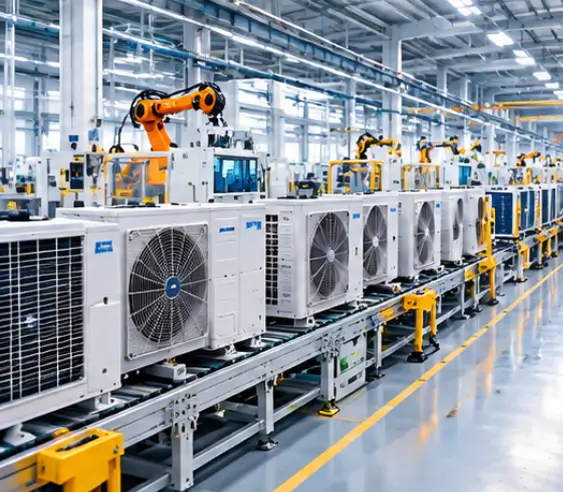
The following profiles detail each factory’s founding, location, key products, and strengths. Buyers should match these profiles against their project requirements. Selecting the appropriate Chinese HVAC manufacturing partner requires aligning these structural distinctions with specific project parameters.
The ‘Big Three’ Giants: Gree, Midea, and Haier
Gree Electric Appliances operates from Zhuhai. The company is known for vertical integration. Gree produces its own compressors, a rare capability that reduces costs and improves quality control. Key products include residential air conditioners, commercial chillers, and VRF systems. The primary strength is cost leadership through massive scale, which enables aggressive pricing.
Midea Group is headquartered in Foshan. The company focuses on smart home technology. Midea invests heavily in R&D, developing inverter technology and IoT connectivity. Key products include VRF systems, heat pumps, and air handling units. The strength lies in a diversified product portfolio. Midea serves both residential and commercial markets globally. This provides buyers with a single source for multiple product types. Midea functions as a comprehensive HVAC manufacturing hub in China, maintaining robust global export volumes.
Haier Smart Home leads in connected appliances and smart climate solutions. The company integrates HVAC equipment with its IoT ecosystem. Key products include ducted air conditioners, VRF systems, and smart home climate controls. Haier’s strength is brand recognition and a robust IoT platform. The company has extensive export experience in North America and Europe. Haier’s connected systems allow remote monitoring and control, a feature increasingly demanded in commercial projects.
Specialists in Commercial and VRF Systems
Daikin Industries operates its Suzhou facility as a premium technology center. Daikin leads in inverter technology and high-efficiency VRF systems. The company offers unmatched technological sophistication. VRF systems from Daikin achieve industry-leading energy efficiency ratios. Buyers seeking premium performance typically place Daikin at the top.
Johnson Controls-Hitachi Air Conditioning is a joint venture focused on commercial HVAC. The company produces centrifugal chillers, screw chillers, and large VRF systems. Deep expertise in large-scale commercial projects sets this factory apart. Johnson Controls-Hitachi has supplied equipment for airports, hospitals, and data centers worldwide.
Carrier operates its China factories with global brand trust. The company serves both commercial and residential sectors. Carrier offers a wide range of solutions including chillers, rooftop units, and split systems. The legacy brand name provides confidence for buyers new to sourcing from China.
Hisense Hitachi specializes in VRF and central air conditioning systems. The company combines Japanese technology with Chinese manufacturing efficiency. This delivers high-quality VRF systems at competitive price points. Hisense Hitachi has grown rapidly in export markets.
TCL Air Conditioner operates from Zhongshan and focuses on value-driven exports. The company produces residential and light commercial units at high volume. TCL offers strong OEM and ODM capabilities. Buyers seeking cost-effective production with customization options find TCL attractive.
Zhejiang Tengxuan Explosion-proof Electrical Appliance Company fills a specific niche. The factory produces explosion-proof HVAC equipment for hazardous environments. Oil and gas facilities and chemical plants require these specialized units. Tengxuan holds unique certifications. Contractors requiring ATEX or similar explosion-proof equipment should engage with this specialized Chinese HVAC supplier.
Zero Technologies is an emerging innovator in energy-efficient and sustainable cooling. The company uses cutting-edge technology to address tightening environmental regulations. Zero Technologies positions itself well for 2026 requirements. Buyers preparing for stricter efficiency standards should evaluate their offerings.
Comparative Analysis of Top China HVAC Factories
Product Focus and Capability Comparison
The ten factories serve distinct market segments. Generalist giants compete across residential and commercial categories. Specialized factories focus on narrow niches where their expertise creates clear advantages. The table below summarizes each factory’s positioning.
| Factory | Primary Product Focus | Key Strengths | Target Market | Typical MOQ Level |
|---|---|---|---|---|
| Gree | Residential, Commercial | Vertical integration, cost leadership | Domestic, Export | High |
| Midea | Residential, Commercial | Smart technology, R&D investment | Domestic, Export | High |
| Haier | Residential, Commercial | IoT ecosystem, brand recognition | Domestic, Export | High |
| Daikin (Suzhou) | Commercial, VRF | Premium inverter technology | Export | Medium |
| Johnson Controls-Hitachi | Commercial, Industrial | Large-scale project expertise | Export | Medium |
| Carrier (China) | Commercial, Residential | Global brand trust | Domestic, Export | Medium |
| Hisense Hitachi | Commercial, VRF | Japanese tech, Chinese efficiency | Export | Medium |
| TCL | Residential, Light Commercial | Cost-effective OEM/ODM | Export | High |
| Zhejiang Tengxuan | Industrial (Explosion-proof) | Niche safety certifications | Export | Low |
| Zero Technologies | Commercial, Industrial | Energy-efficient innovation | Export | Low |
Volume producers like Gree, Midea, and Haier require high minimum order quantities. Their production lines run continuously for standard models. Specialized factories offer lower MOQs. Zhejiang Tengxuan and Zero Technologies accept smaller orders due to their niche focus. Finalizing an HVAC supplier in China dictates aligning the required production volume with the facility’s manufacturing thresholds. A buyer needing 500 units of a standard split system gains leverage with the Big Three. A buyer needing 50 explosion-proof units should contact Zhejiang Tengxuan. These distinctions guide supplier selection.
Pricing, MOQs, and Lead Times
Chinese manufacturers price residential split units 20 to 40 percent below Japanese and US counterparts. Midea’s Ultra-Quiet 2.0 series retails at $1,200. A comparable Mitsubishi unit costs around $2,000. This pricing advantage comes from scale economies and lower labor costs. The savings become significant for large projects.
The Big Three offer lower per-unit pricing but require higher MOQs. Their factories optimize for long production runs. Specialists accept smaller orders at higher unit prices. Buyers should calculate total landed cost when comparing suppliers. Shipping, duties, and inspection fees add to the base price.
Standard production orders require 30 days from a Chinese manufacturer. Stock orders ship in 10 to 14 days when inventory is available. These timelines apply to residential units for markets like the Middle East. Custom orders, including commercial VRF systems, require longer lead times. Buyers must factor these timelines into project schedules. Ordering early prevents delays that disrupt construction timelines.
A Buyer’s Guide to Sourcing from a China HVAC Factory
Mitigating Key Sourcing Risks
Procuring commercial or residential equipment directly from an HVAC factory in China introduces specific operational and quality control variables. Quality control inconsistencies top the list. Not all suppliers maintain consistent quality. Some manufacturers fail to meet international standards. Others experiment with unique designs. This innovation creates product variations that complicate evaluation across suppliers. Scale-up quality concerns also emerge. Systems that pass initial inspection may not survive mass production.
The table below outlines common quality control issues reported by importers.
| Quality Control Issue | Description |
|---|---|
| Tight Tolerances & Precision | Parts may be off by even 0.1 mm in critical dimensions. Components fail to fit or function properly. Suppliers may request relaxed tolerances when they lack capability. |
| Material Inconsistency | Suppliers substitute cheaper metal or plastic grades to cut costs. Parts wear faster or fail under stress. This practice undermines compliance with standards like ASTM. |
| Compliance Gaps | Factories ship products missing required certifications. No UL listing, improper labeling, or failure to meet country-specific requirements occur. |
| Lack of Thorough Performance Testing | Parts pass visual inspection but fail in real-world use. Motors overheat after hours of operation. Pressure testing, torque testing, or load testing may be inadequate. |
| Quality Fade over Time | Suppliers deliver good quality initially, then cut corners on later orders. Subtle issues appear: softer metal, dimensional variability, cosmetic defects. |
| Communication and Cultural Differences | Language barriers cause misunderstandings in technical specifications. Chinese manufacturers may quietly attempt challenging designs instead of voicing concerns. |
Intellectual property infringement presents another serious threat. A factory might share proprietary designs with competing buyers. Clear contracts prevent this risk. Include non-disclosure agreements and explicit IP ownership clauses. Third-party inspections provide additional protection. Independent agencies verify production quality before shipment.
Communication barriers extend beyond language. Different business norms create confusion. A supplier may agree verbally but fail to document changes. Written specifications eliminate ambiguity. Every requirement must appear in the contract. Every modification requires written approval.
Your Step-by-Step Verification Process
A structured verification process protects your investment. Execute these five verification protocols prior to issuing purchase orders to any Chinese HVAC equipment manufacturer.
Step 1: Request a factory audit report. Independent agencies like SGS or Bureau Veritas conduct thorough facility assessments. These reports verify production capacity, quality systems, and working conditions. Request the most recent audit. Review it carefully for red flags.
Step 2: Order samples for testing. Sample orders reveal actual product quality. Test units under real operating conditions. Measure performance against your specifications. Check dimensional accuracy with precision instruments. Verify material composition through laboratory analysis. A factory that passes sample testing deserves further consideration.
Step 3: Conduct a video call or in-person visit. Visual confirmation matters. Walk through the production line virtually or physically. Observe assembly processes. Assess housekeeping standards. Evaluate testing equipment. Ask to see quality control checkpoints. A factory with robust processes will welcome scrutiny.
Step 4: Verify business licenses and export certifications. Request copies of all relevant documentation. Confirm the business license matches the company name on your contract. Check export certifications against your target market requirements. Europe requires CE marking. North America demands UL or CSA certification. Canada mandates CRN for pressure vessels. Missing certifications delay customs clearance.
Step 5: Request references from international clients. Established exporters maintain relationships with overseas buyers. Ask for contact details of three clients in your region. Contact these references directly. Ask about delivery performance, quality consistency, and responsiveness. A factory with satisfied international customers demonstrates proven capability.
Critical Warning: Quality fade represents the most dangerous risk. A factory may deliver excellent first orders, then gradually reduce quality. Contractual quality clauses and ongoing third-party inspections prevent this decline.
Apply this framework consistently. Document every finding. Compare results across shortlisted factories. This systematic approach transforms supplier selection from guesswork into confident decision-making.
The optimal HVAC production facility in China is ultimately the one that satisfies your specific technical and commercial parameters. This list offers a strong starting point. The buyer’s guide provides the critical tool for final selection.
The Big Three deliver volume pricing and broad product lines. Specialized manufacturers offer deep niche expertise and lower minimum orders. Match factory type to your specific needs.
The Chinese HVAC market rewards prepared buyers. Approach it with thorough research and a clear verification strategy. Use our framework. Verify every claim through independent audits. Make your 2026 sourcing decisions with confidence.
FAQ
How do I verify a factory’s production capacity claims?
Request a third-party audit from SGS or Bureau Veritas. These reports verify floor space, equipment, and workforce numbers. Cross-check shipment records through Chinese customs data. Ask for banking references that confirm transaction volumes. A factory’s actual capacity should align with its export history.
What minimum order quantities should I expect?
The Big Three typically require high MOQs because their lines run continuously for standard models. Specialists like Zhejiang Tengxuan and Zero Technologies accept smaller orders. TCL offers flexible OEM options. Contact each factory directly with your volume requirements. Negotiate MOQs as part of your initial contract discussions.
How long does production and shipping take?
Standard residential units require approximately 30 days for production. Stock orders ship within 10 to 14 days when inventory exists. Custom commercial VRF systems require longer lead times. Factor ocean freight time separately. Order early to prevent construction delays.
Which certifications matter for my target market?
Europe requires CE marking and RoHS compliance. North America demands UL or CSA safety certification. Canada mandates CRN registration for pressure vessels. AHRI certification remains voluntary but verifies performance ratings. Confirm every certification in writing before placing your order.
How do I choose between the Big Three and a specialist?
Match factory type to project scope. The Big Three deliver volume pricing and broad product lines. Specialists offer deep niche expertise and lower minimum orders. A 500-unit standard split system order suits Midea or Gree. A 50-unit explosion-proof requirement belongs with Zhejiang Tengxuan.