The choice between a VRF heat pump and a heat recovery VRF comes down to one question: does your building ever need both at the same time? Heat recovery costs more upfront, but in mixed-zone buildings that premium can pay itself back through energy savings.
A heat pump VRF serves uniform loads well. A VRF heat recovery system shines when zones demand different modes. Your building’s comfort and budget will decide.
Key Takeaways
- A heat pump VRF system heats or cools all zones together. It costs 20-30% less upfront.
- A heat recovery VRF system allows simultaneous heating and cooling. It saves energy in mixed-load buildings.
- Heat recovery systems pay back their higher cost in 2-4 years for buildings with diverse needs.
- A professional load analysis reveals your building’s heating and cooling patterns. It confirms the right system.
- Choose a heat pump for uniform loads. Choose heat recovery for opposing zone demands.
Core Difference: Simultaneous or Single Mode
The distinction comes down to one capability. A standard VRF heat pump forces every indoor unit into the same mode — all zones heat or cool together. A heat recovery system lets zones operate independently, cooling some rooms while heating others. Every difference in cost, efficiency, and application fit
follows from that single point.
VRF Heat Pump: Single-Mode Operation
A heat pump VRF locks every indoor unit into the same mode, so the entire facility heats or cools together. That limits flexibility — and it is exactly why the design costs less upfront.
When a Heat Pump VRF System Is Sufficient
A heat pump VRF system earns its keep in buildings where every zone wants roughly the same thing.Open-plan offices are the textbook case: occupants share one large space, so nobody calls for heatwhile their neighbor calls for cooling. Warehouses and storage facilities behave the same way, holding
steady temperatures around the clock, and residential buildings with similar room usage are not far behind.
In these environments, paying for zone independence buys you nothing. Without branch controllers toinstall, the system goes in faster and costs less, yet still delivers consistent comfort across every zone. Efficiency does not suffer either — the inverter compressor modulates output to match the actual
load, so the unit never works harder than the building asks it to.
The deciding factor is simple: if conflicting demands rarely occur in your building, heat recovery capability will sit unused. A heat pump VRF meets the need directly, and the budget saved can go where it actually earns a return.
Cost Advantages of Single-Mode Design
The financial case for single-mode design starts with the invoice: no branch controllers, less piping, and faster installation push equipment, material, and labor costs down from day one. That simplicity compounds over the system life. With fewer components there are fewer failure points, and any technician
with standard HVAC training can service the unit — no manufacturer-certified specialist required.
For commercial projects, the lower upfront cost improves cash flow and frees capital for other building systems. It also helps that standard heat pump VRF units are the most widely produced category on the market, because competition among manufacturers keeps pricing sharp.
One caveat matters here. These savings only count if the building genuinely has uniform loads: paying less for a heat pump makes sense, but paying extra for heat recovery capability that never gets used does not. A careful load analysis tells you which side of that line your building sits on.
Heat Recovery VRF: Simultaneous Heating and Cooling
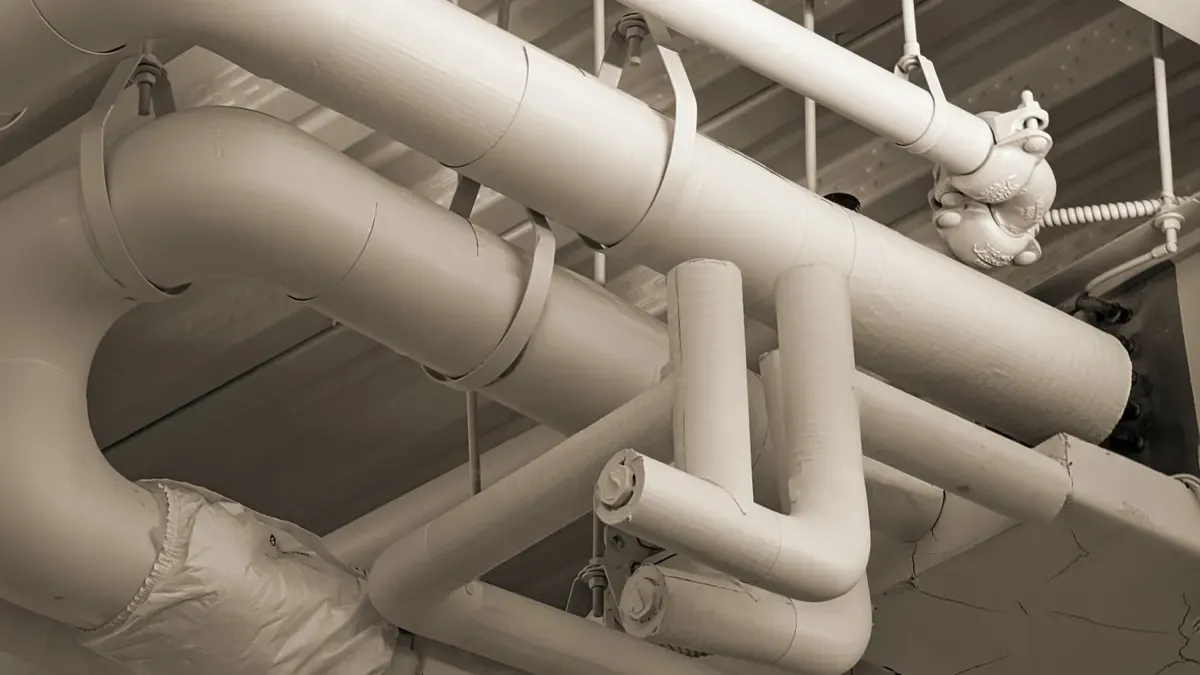
A heat recovery VRF adds a branch controller between the outdoor unit and the indoor units, which lets one zone reject heat while another absorbs it. Instead of dumping that energy outdoors, the system moves it where it is needed — recovering waste heat in the process.
How Heat Recovery VRF Works (Branch Controller Role)
Think of the branch controller as a traffic manager for refrigerant. It splits the main line into separate paths and decides, in real time, what each indoor unit receives: liquid refrigerant for zones calling for cooling, hot gas for zones calling for heating. That is what makes simultaneous heating
and cooling possible across one building.
The design flexibility this unlocks is substantial: a hotel can warm itsperimeter guest rooms while cooling interior corridors, and a hospital canhold operating rooms at lower temperatures while patient rooms stay warm —all from one system. Any commercial facility with opposing loads fits the
same profile.
Energy Efficiency Gains and Payback
The upfront premium runs higher than a heat pump system. The payback period typically falls within two to four years for mixed-load facilities. A hotel or hospital with steady internal gains recovers the investment through lower utility bills. The savings accumulate each hour the system moves heat instead of generating it. The exact payback depends on how many hours per year your zones actually demand opposing modes — which is why this number must come from your building’s load profile, not a rule of thumb.
Comparison Table: Heat Pump VRF vs. Heat Recovery VRF
The table below compares the two systems across cost, complexity, and efficiency.
Cost, Complexity, and Efficiency Differences
| Aspect | VRF Heat Pump | Heat Recovery VRF |
|---|---|---|
| Upfront cost | Lower | Higher initial investment |
| System complexity | Simple; no branch controllers | Higher; includes branch controllers and additional piping |
| Installation time | Shorter | Longer due to extra components |
| Efficiency with uniform loads | High | Comparable to heat pump |
| Efficiency with mixed loads | Reduced; forced into single mode | High; heat transfers between zones |
| Maintenance requirements | Fewer parts; standard HVAC service | More components; specialized technician required |
| Simultaneous heating and cooling | Not supported | Fully supported |
The exact premium varies by region and system size — a large commercial project with extensive piping will amplify the gap far more than a small installation. Get quotes from at least two or three local contractors before deciding.
Efficiency depends heavily on load patterns. With uniform loads, a heat pump VRF performs on par with heat recovery — the inverter compressor simply modulates output to match demand. With mixed loads, heat recovery pulls ahead because it transfers heat between zones instead of generating it, which reduces
compressor workload and utility consumption each operating hour.
The complexity gap also affects long-term budget planning: branch controllers require technicians with manufacturer-specific training, so service contracts for heat recovery systems typically cost more. Factor this into total cost of ownership alongside the energy savings.
Best Building Applications for Each System
Heat pump candidates — open-plan offices, warehouses, uniform-load buildings — are covered above. Heat recovery earns its premium in a different set of structures.
An office structure with a core zone and perimeter zones benefits as well. The core requires cooling year-round from equipment and occupant body heat. The perimeter needs heat during winter months due to heat loss through windows. A heat recovery system transfers core heat to the perimeter zones. This process reduces energy consumption significantly.
The thermal load pattern determines the best fit. A professional load analysis provides the data needed for this decision. The analysis reveals how often zones demand different modes throughout a typical day. The analysis also quantifies expected energy savings.
Building Loads and Zoning Needs
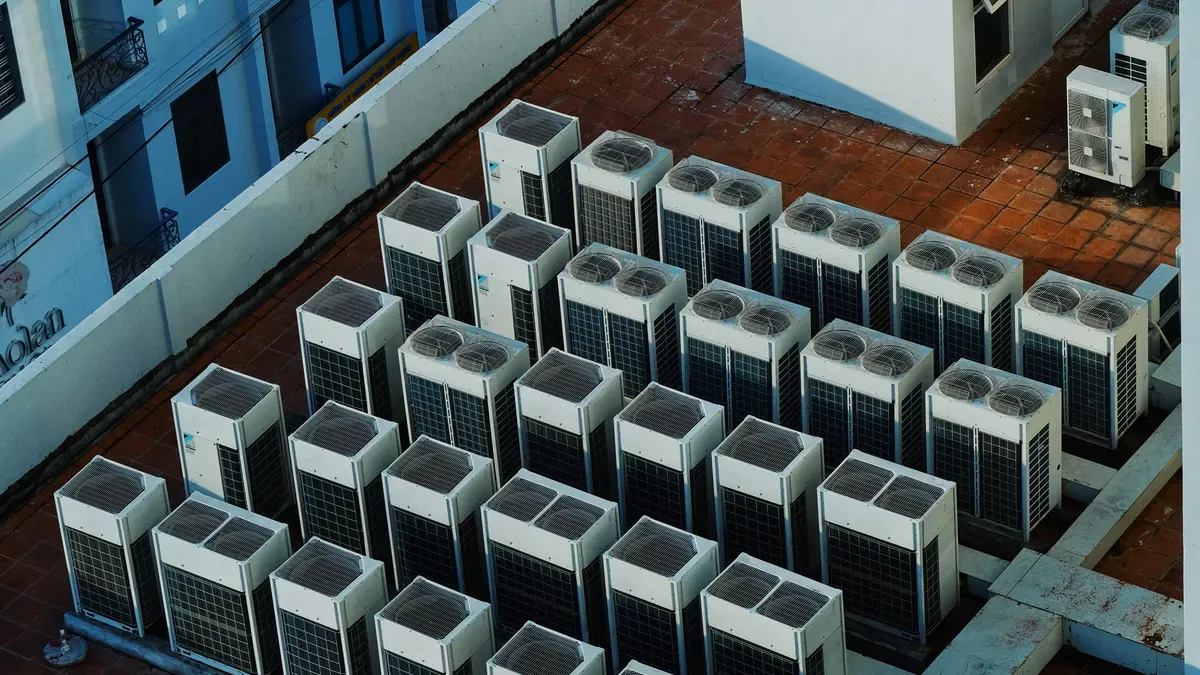
The key factor in system selection is whether your building has simultaneous heating and cooling zones. A professional load analysis reveals these patterns. The table below shows typical thermal load differences in commercial buildings.
| Zone Type | Typical Thermal Load Pattern |
|---|---|
| South and west perimeter zones | May require cooling on a mild-weather day due to solar gain and exterior wall exposure |
| North perimeter zones and interior zones | May require heating on the same mild-weather day |
These opposing demands make a heat recovery system the more appropriate choice. The efficiency benefit from heat reuse and improved occupant comfort from independent zone control typically offsets the premium within two to four years.
Climate, Energy Codes, and Incentives
Climate shifts the calculation more than most owners expect. Cold-climatebuildings can still benefit from heat recovery in shoulder seasons, whencooling zones generate waste heat the system can redirect to heating zones.Local energy codes matter too: some jurisdictions rebate high-efficiency HVAC
designs, which can shorten the payback period considerably.
Budget is the counterweight. If capital is tight, the simpler heat pump design gets you efficient cooling now — just know that in a mixed-load building you are trading higher utility bills later for the lower price today.
Decision Framework for Your Building
A structured evaluation prevents costly mistakes. The following framework guides facility managers toward the correct system for their specific needs.
Five Questions to Determine the Right VRF System
Answer these before requesting equipment quotes — each one narrows the field.
- Does any zone need heat while another needs cooling during the same hour? A yes answer points toward a heat recovery system. A no answer suggests a vrf heat pump will suffice.
- How uniform are the thermal loads across the building? Uniform loads favor a heat pump system. Mixed loads favor heat recovery.
- What is the occupancy schedule? A commercial office with consistent hours fits a heat pump vrf. A hotel with twenty-four-hour occupancy and varying room demands fits a heat recovery vrf.
- What is the climate profile? Cold climates may still benefit from vrf heat recovery during shoulder seasons. Mild climates with uniform temperatures may not justify the premium.
- What is the available budget? A heat pump system costs less upfront. A heat recovery system delivers stronger long-term savings in mixed-load buildings.
Whatever your answers suggest, confirm them with a professional load analysis. By modeling hourly thermal demands across every zone, it shows how often simultaneous heating and cooling actually occurs — and that frequency is what decides whether the heat recovery premium pays back.
When a Single-System Approach Might Fail
A single-mode design fails the moment a building develops opposing thermal demands. Picture a mixed-use tower on a mild day: south-facing offices overheat from solar gain while north-facing offices call for heat. The heat pump must pick one mode for the whole building, and one side stays uncomfortable no matter how occupants adjust their thermostats.
A heat pump system cannot deliver simultaneous heating and cooling. A building with permanent opposing loads will never achieve full comfort with this design.
The pattern repeats in any building with permanent opposing loads — hospitals cooling equipment-heavy areas against heated patient rooms, hotels with heat-gaining corridors against heat-losing guest rooms. These loads do not cancel with the seasons.
Heat recovery solves this at the branch controller: heat removed from cooling zones is delivered straight to heating zones, so one integrated system keeps the whole building comfortable without separate heating equipment.
Uniform-load buildings never hit this wall — an open-plan office or warehouse runs happily on a heat pump. The difference only bites when thermal demands diverge, and a load analysis is what tells you which building you actually have.
Real-World Payback Examples
Two scenarios show how load patterns drive the payback math.
Open-Plan Office (Uniform Loads)
An open-plan office with uniform loads rarely needs simultaneous heating and cooling — every zone tracks the same conditions through the day. A heat pump VRF serves that profile for less money, which makes the payback immediate: the building simply never spends the premium.
The savings continue in operation: fewer components, lower maintenance costs, no branch controllers to service. For this building type, spending more on heat recovery buys capability that never gets used.
Mixed-Use Building (Varying Loads)
A hotel with 100-plus rooms presents a different financial picture. Sunny-side and shaded-side rooms create simultaneous demand. Public spaces and guest rooms also need different modes at the same time. A heat recovery system handles these opposing loads from one outdoor unit. The system moves heat between zones instead of rejecting it outdoors.
The upfront premium is higher, and utility-bill analysis puts the payback at 4 to 8 years, with a median of 6 — the conservative end of the typical 2-4 year range, because seasonal occupancy cuts the annual hours of simultaneous demand. Even so, every hour of heat reuse trims compressor workload, so the premium erodes steadily until the system crosses into net savings.
The hotel case confirms the general rule. A building with distinct zones and opposing thermal demands justifies the higher investment. Before committing capital, have the load analysis run on your actual floor plan — the two scenarios above show how much the answer depends on it.
The rule is simple: heat pump for uniform loads, heat recovery for opposing ones. Both systems deliver comfort — the difference is whether you are paying to waste heat or to reuse it.
Have your building’s load patterns analyzed by an HVAC professional to confirm the payback period. Contact us for a free consultation.
FAQ
Does my building need simultaneous heating and cooling?
A building needs simultaneous operation when one zone requires warmth while another needs cooling during the same hour. Perimeter zones and interior zones often create this conflict. A professional load analysis reveals these patterns. A heat recovery system handles opposing demands from one outdoor unit.
How much more does a heat recovery system cost upfront?
A heat recovery system costs more than a heat pump VRF. The premium covers branch controllers and additional piping. The exact figure varies by region and system size. Local contractor quotes provide accurate pricing for your project.
What payback period can I expect from a heat recovery system?
A commercial building with mixed loads typically sees payback in 2-4 years. A hotel case shows a range of 4-8 years with a 6-year median. Energy savings from heat reuse drive the return. A load analysis confirms your specific payback.
Which system suits a hotel or hospital?
A heat recovery system suits hotels and hospitals well. These buildings have distinct zones with opposing thermal demands. Guest rooms and patient rooms need heat while corridors and equipment areas need cooling. One integrated system serves both needs efficiently.
Can a heat pump VRF work in a cold climate?
A heat pump VRF can work in cold climates. However, a heat recovery system may still benefit during shoulder seasons. The system captures waste heat from cooling zones and redirects it. Local energy codes and incentives also influence the decision.